Friday, December 31, 2010

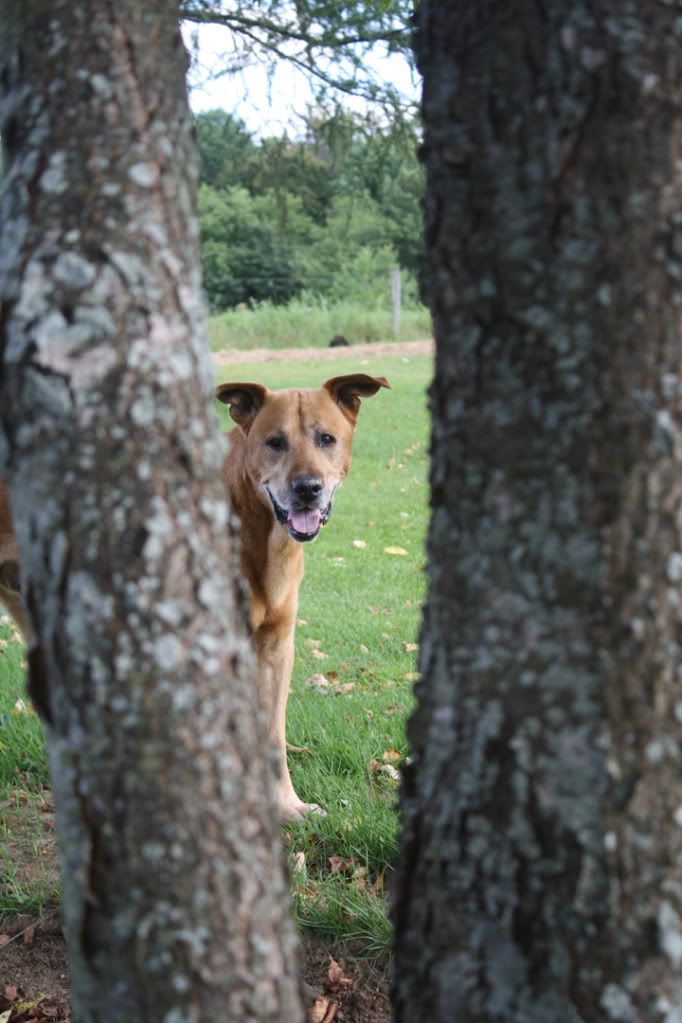
J.B., January 12, 1997 - December 31, 2010


No matter how many times you experience significant loss, it never gets any easier to endure. When a part of you dies, grief, seemingly unbearable, crashes over you like waves. Gigantic, powerful waves. Fighting against the drowning wears you out. Wears you out.

At 12:20 PM on New Year's Eve day, J.B., my beloved dog, finally gave up the ghost. I slept on the floor by his side the night before because I just knew it would be his last night with us. I couldn't bring myself to call the vet, so we let him go on his own.

The morning before, he ate a few last morsels of fried chicken but didn't move from his bed the entire day. The evening before that, he had gotten up and dragged himself into the living room when Jop came home just to give and receive some love. The evening before he passed, he had no energy left for even that. But later, in the middle of the night, he kept raising his head and looking around. I believe he was looking for Jop, but I couldn't bring myself to go upstairs and wake him up. J.B. seized up more than once, expelling a loud noise, but he didn’t let go. He went back to sleep, raising his head and looking around every so often.

He waited for his other daddy to come home before he went. Jop had to take care of a friend that morning. As soon as he returned, J.B. tried to get up from his bed to no avail. Finally, I carried him outside where he was able to stand up one last time. He wagged his tail. Tried to walk to the barn to look for him. Finally, Jop came around, sat down on the back porch steps and started to rub J.B.'s face. Scratched him under both ears like he loved so much. Just as I walked back out, J.B. threw back his head, seized up and fell to the icy ground. He tried to come back one last time, gasping for breath in long intervals. But we told him to go. Please, go. Held him till his gasping ceased.

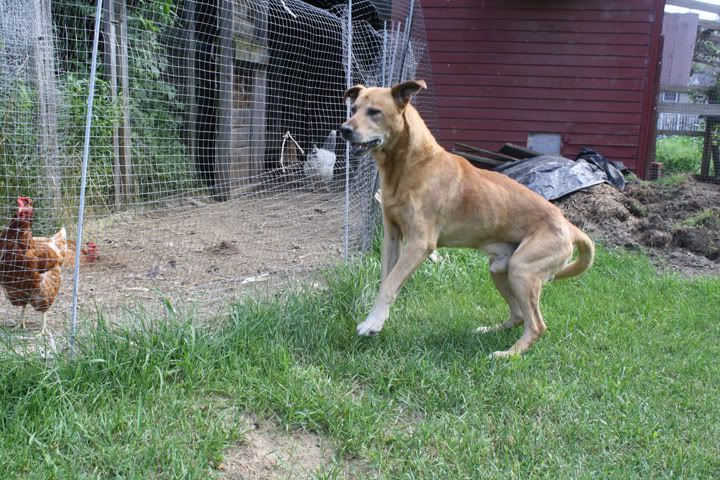
He was gone. We buried him under the weeping willow tree in the grave we had dug back on Labor Day weekend. Back when he first began his long and arduous journey toward death. Long because he didn’t want to leave. Arduous because he didn’t want to let go. Didn’t want to stop chasing the chickens or exploring all the smells in the barn. Didn’t want to stop barking at the sheep or grazing with the horses or greeting the customers, his tail wagging all the while. Didn’t want to stop pushing his snout so hard against my chest it felt as though he wanted to crawl inside.

He didn’t want to stop loving.

J.B., who we adopted at three months and named after my favorite author James Baldwin and both of us (Jop Blom and Joseph Bernard, the name my birth mother gave me when I was first born) is my inspiration. He lived life with passion and never met a challenge he couldn't conquer. Like all dogs, he was unconditional love incarnate. He pulled me through many of life's greatest challenges, his devotion abiding. Two weeks shy of 14-years-old, his life spanned three decades. His indomitable spirit was the strongest I've ever known.

I’ll find you
In the morning sun
And when the night is new.
I’ll be looking at the moon,
But I’ll be seeing you.

Farewell, old friend. So long.


Sunday, December 26, 2010

My Mother's Cake


When I was about seven or eight, I began to teach myself how to bake from recipes in the original Betty Crocker's Cookbook. The paperback culinary bible was so old, so worn out, some of the pages disintegrated between my fingers upon turning. The whole thing had to be held together with a pair of crisscrossed rubber bands.

I made a yellow sheet cake first. I didn't understand the concept of creaming the butter and sugar together. It turned out like sweet cornbread. My mother said it tasted good, though. Guess she wanted to encourage me to keep trying. And so I did.

She used to come home from work every afternoon and ask me what I had learned to bake. Looking forward to tasting whatever it was. It must have been summer for I wasn't in school. And there I was heating up an already hot kitchen with a child's experiments. She never once complained. Eventually, I figured out the art of building a cake from scratch that was moist and light and downright sinful. I perfected an old fashioned burnt sugar caramel cake and then had the nerve to figure out how to make hand-churned caramel pecan ice cream to go with it. The combination became my mother's favorite and most requested dessert.

Yesterday, I made my mother's cake for the first time since August 2001. I wanted to be with her for Christmas to see how she's faring since receiving the news that she's now facing a mortal challenge in her bone marrow. Still too exhausted from the year, I wasn't able to make that happen. So I made her cake instead. Talked to her over the phone just as I was spreading the batter into the pans. Because of her diabetes, she can't have any sweets anymore, but she sounded pleased that I was building her heaven anyway.

We hosted a dinner at the farm for six. Before devouring my mother's cake (alongside a warm apple pie in a pâte brisée to die for), we indulged in a dinner of crab bisque, grilled lamb chops, roasted rabbit in Dijon cream (a repeat from Thanksgiving too good to wait another year for), wild black and mahogany rice, and steamed haricot vert tossed in sesame oil and orange zest.

Hope your Christmas celebrations included friends, family, peace, and lots of love.

Burnt Sugar Caramel Cake


For the burnt sugar syrup:
3/4 cup granulated sugar
3/4 cup hot tap water

Dump the sugar in a skillet over medium-low heat. Shake the pan to spread the sugar and then let it melt, shaking again to keep the syrup browning evenly. Once it becomes the deep bronze color of an old copper penny and begins to smoke, gradually add the hot water. The sugar will get all bubbly and smoke even more. If you stir the syrup, use a metal spoon and stir just enough to mix the water so all the sugar dissolves, which takes about 8 minutes. Remove from heat, set aside, and let cool. They syrup will thicken as it cools.

For the cake:
3 cups unbleached cake flour, sifted
1 teaspoon salt
1 1/2 teaspoons baking soda
2 1/2 teaspoons double acting baking powder
3/4 cup butter, softened
1 1/2 cup sugar
2 eggs, separated
2/3 cup burnt sugar syrup
1 teaspoon pure vanilla extract
1 1/2 cup sour raw milk or buttermilk, room temperature

Preheat oven to 350. Sift together flour, salt, soda, and baking powder. Set aside.

In a separate bowl, cream butter, adding sugar gradually until light and fluffy. Add one egg yolk at the time, beating thoroughly after each addition. Add the vanilla. Stir in cooled burnt sugar syrup.

Alternately mix the flour and the dairy into the batter, beating gently until smooth.

Beat egg whites on high until stiff but not dry. Fold into batter.

Spread batter evenly in two 8-inch greased and floured cake pans. (I add a circle of wax paper to the bottom of each pan to ensure a moist texture.) Bake for 30 - 35 minutes until the centers rise and a toothpick comes out virtually clean. Remove from oven and cool on wire rack for 5 minutes. Invert pans on rack to remove cake. Let cool completely.

For the caramel frosting:
3/4 cup butter
2 cups light brown sugar, firmly packed
Dash of salt
3/4 cup heavy cream
1 teaspoon pure vanilla extract
2 1/2 cups confectioners' sugar, sifted

Mix butter, brown sugar and salt in a saucepan over medium heat. Bring to a boil. Let bubble for 15 minutes, stirring constantly. Mix in cream and cook for another 10 minutes, stirring.

Remove from heat, stir in vanilla. Transfer to a stainless steel bowl. Beating at high speed, gradually add confectioner's sugar until it comes to a spreading consistency. Sparingly add more cream if necessary.

Garnish frosted cake with pecans.

::

Cross-posted to Annabessacook Farm

Saturday, December 18, 2010

It Is Finished

The Senate has just voted 65-31 to repeal Don't Ask Don't Tell.

65-31. An unexpected and strong majority.

Employment discrimination in the military for gay and lesbian patriots will finally come to an end when President Obama signs the legislation.

From the other side, Harvey Milk is smiling.

Wednesday, December 08, 2010

Today

The Feast of Harvest
has passed. Yuletide
rapidly approaches.

Smack dab in the middle
is today, the day I came
to be 43 years ago.

I have now lived longer
than all my artist
mentor friends,
save one.

Today,
I sing.

Friday, November 26, 2010

The Menu

The menu was roasted organic butternut squash soup, herb-marinated roasted Moonshadow Farm (Old Lewiston Rd.) rabbit with mustard sauce, brined Mt. Pisgah pheasant roasted with bacon bard, glazed organic turnips, cranberry relish, risotto, whole-wheat rolls, sweet potato souffle torte, and frozen vanilla custard. Dinner for four at Annabessacook Farm was decadent.

Thursday, November 25, 2010

Happy Thanksgiving


I received this email today. I'm sharing it with you in its entirety. I couldn't have written it any better.

This Thanksgiving, give thanks to the farmers and farmworkers who make this meal possible.

Dear Craig,

It’s that time of year again. Every fall people travel across the country or just across town to share a meal with family, friends and loved ones in order to celebrate another year of health, happiness and good food. Born from the tradition of one tribe bravely and generously helping another tribe in a time of need, this celebration has turned into an annual feast where our nation sits down collectively to share in the gratitude over another bountiful harvest.

Here at Food Democracy Now!, we wanted to take a moment and say that we are all thankful for the opportunity to work with so many amazing people across the country who are dedicated to building a truly sustainable food system that improves the lives of farmers, workers, eaters, communities and the planet.

Every day I wake up looking for a way to convey one of the most important messages of our time: if you want to change the world, change how you eat. In addition, at Food Democracy Now! we strive to give you opportunities to help make that happen through positive action.

Central to the growing understanding of how what we eat impacts the planet is knowing where our food comes from, how it was raised, who grew it and helped that food find its way to our tables. Fortunately, there’s no shortage of incredible people and organizations out there working to educate more Americans and helping bring the change we need to thrive in the 21st century.

One tradition that we have in our household is that at every meal we take a moment to say what we are thankful for. Inevitably, it always comes back to the food: Who cooked it, who helped prepare it and who raised it and brought the food to our tables.

Here at Food Democracy Now!, we’d like to ask you to join us in this tradition by joining us on Facebook and sharing with us what you are Thankful for. If there are any farmers that you’d like to give a shout out to, please mention them too.

http://action.fooddemocracynow.org/go/285?akid=233.147124._4YYoC&t=8

As we sit down to eat this symbolic meal, nothing could be as important as honoring the individuals that labor everyday on farms and in the fields, often doing backbreaking work, with very little financial reward to make it possible for us to nourish our bodies.

I wanted to share an important video with each of you and ask that you pass it on.

http://action.fooddemocracynow.org/go/282?akid=233.147124._4YYoC&t=10

This video highlights an impressive campaign by The Coalition of Immokalee Workers (CIW) who have advocated tirelessly for the rights of farmworkers to be paid a decent wage for the work of picking tomatoes. Every day in Florida, workers go out into the fields under the hot sun to pick the tomatoes that end up on our plates.

For a full bucket of tomatoes, weighing 32 pounds, farmworkers are only paid 45 to 50 cents. Unimaginably, this wage has not changed in more than 30 years. Fortunately, there are groups like the Coalition of Immokalee Workers who are advocating to change this.

Incredibly, these farmworkers are only asking for a raise of as little as a penny a pound.

As we eat our Thanksgiving meals this year, I want to ask that we all begin to think deeper about our food and the consequences that our meals have on everything around us. It’s really unfathomable that as little as a penny per pound could make a difference in someone’s life, but time after time, as we’ve found out, it’s the little changes that eventually add up.

Here at Food Democracy Now!, we’d like to honor all the farmers and farmworkers who make this day possible and to all the people across the country working tirelessly to bring us the stories of those who help make the world a better place by growing and harvesting our food.

With gratitude,

Dave Murphy

Founder and Executive Director

Food Democracy Now!


Happy Thanksgiving. Take care of your blessings.

Monday, November 22, 2010

Native Americans, Black Farmers Receive Justice


Black Farmer Painting by John Lautermilch

Senate approves $4.5B payment to Native Americans, black farmers

After months of hang-ups, the Senate unanimously approved Friday two multibillion-dollar settlements that will rectify long-standing claims against the federal government for discrimination and mismanagement.

The vote essentially brings closure to the two cases, which have each been litigated for more than a decade.

The House, which has twice endorsed the deals, must still do so one more time, an action that is expected after Thanksgiving. Senate approval, however, has been a huge hurdle for Native Americans, who sued the government over poorly handled individual Indians' trust accounts, and black farmers, who were for years unfairly refused loans by the Agriculture Department.

"Black farmers and Native American trust account holders have had to wait a long time for justice, but now it will finally be served," Senate Majority Leader Harry M. Reid (D-Nev.) said in a statement after the vote. "I am heartened that Democrats and Republicans were able to come together to deliver the settlement that these men and women deserve for the discrimination and mismanagement they faced in the past."

Native Americans involved in the land trust lawsuit will get access to a $3.4 billion fund. Black farmers who are a part of a class-action lawsuit against the USDA will receive a $1.15 billion settlement.

Read the rest...

It's been a long time coming.