Thursday, September 03, 2020

Black Bodies Are Human Bodies

 He traveled to my native state of Wisconsin, just miles down the country roads from where my parents are surely rolling over in their graves, to survey destruction, holding court among men who praised his preening. A world-class disgrace, he said nary a word about the destruction to the lives and loved ones of the victims of the violence he has incited since before he rose to power. 

But we won’t let him tell us what to see, or what to speak. Oh, no.

We must keep the focus on why people are marching and demonstrating and protesting and holding vigils in the first place:

We must condemn police violence against Black bodies.

Black bodies which, by the way, used to be legal property. Legal property that could be violated with torture and brutality and maim and murder by anyone with impunity. Today, though our bodies are no longer legal property, police and vigilantes can still violate Black bodies with torture and brutality and maim and murder with impunity. 

As though our bodies are still property. For you to do with whatever you want. With impunity. 

So. 

Does all property matter? Or just inanimate property?

Is this what you want for your children? Your loved ones? Yourself?

He won't even say his name. 

Jacob Blake. His kidneys, liver and intestines blown apart by seven/eight bullets unloaded into his back at close range. Remnants in his spine remain. He may never walk. Never be without pain or a colostomy bag. He may not survive, still. If so, what will be his quality of life? 

We vehemently condemn a system of policing and any sentiment whatsoever that would seek to justify that kind of brutal crime against humanity. 

That’s right. Black bodies are human bodies.

And so, yes. We vehemently condemn violence against human bodies by anyone, but most certainly by those we pay with our property taxes to serve and protect us. 

But even more than that:

We condemn an impeached autocrat who would incite that brutal violence, who would call for violence against anyone in order to divide and conquer America. A race baiter who would promote, with aggression, white supremacist nationalism and the confederacy, a failed cause of traitors and domestic terrorists. A neo-fascist who would unleash our military and weapons of warfare against the American people. 

We condemn a deluded demagogue who would downplay or deny the severity of a deadly pandemic, forcing people onto the slaughtering lines of meat factories all across America in servitude to China. Forcing students and teachers into petri-dish classrooms from kindergarten through college. 

And we condemn a hyper-corrupt tyrant who would assault, without relent, the American people with the violence of his hate and lies and baseless conspiracies, the violence of his mendacity and cruelty and inane insanities, of his voter-suppressing and election-cheating and un-Constitutional agenda, of his wagging-the-dog and fearmongering and un-American propaganda. 

We must keep the focus where it belongs. The lawless fraud in the White House is the most existential threat to the Republic in all her brief history. A mortal danger to the bodily health and economic well-being of the American people. To the environmental health of our habitat in its entirety.

He must. Be. Removed. From. Office.

Vote.

Friday, July 03, 2015

Representative Hickman's Bill To Prohibit Rehoming Becomes Law in Maine

AUGUSTA – The Maine Legislature on Tuesday unanimously overrode the governor’ veto of a bill sponsored by Rep. Craig Hickman to prohibit the unauthorized “rehoming” of adopted children.

Hickman’s bill, LD 1342, addresses this practice. It prohibits the transfer of the long-term care and custody of a child without a court order. Hickman, adopted when he was a baby, has been involved in adoptee rights issues for the past 20 years.

“Imagine being shipped across oceans to a new culture with a new language to become part of a new family, only to have that family decide that they don’t want you. And since it is not against the law, that family advertises you on Facebook or Craigslist or some other social media platform and within days you are dropped off to another stranger in a parking lot behind some Walmart somewhere,” said Hickman, D-Winthrop. “Yes, this actually happens.”

The Judiciary Committee passed the bill unanimously with an amendment to make rehoming a crime subject to the current penalties for abandonment. It includes an affirmative defense clause to ensure people acting in good faith are not penalized.

The first time Hickman ever testified before a legislative body was before the same committee. In 2005, he spoke in favor of a bill that would allow adult adoptees access to their original birth certificates, which had been sealed when their adoptions were finalized. That bill became law in 2007 and took effect in 2009.

“This legislation will protect children and families from the outrageous indignity called re-homing and send a clear message to adoptees here and all over the nation that Maine people care about the safety and welfare of all our children,” Hickman said.

According to the Washington Times, Colorado, Florida, Louisiana, Ohio and Wisconsin also have adopted laws against rehoming.

“When I saw the votes in favor of this bill light up the board all green, I was moved to tears,” said Hickman. “This is the most important piece of legislation I’ve introduced thus far. As an adopted person, it goes to the core of who I am. It feels like the culmination of two decades of work. I am forever grateful to my colleagues for their overwhelming support.”

Hickman is serving his second term in the Maine House and represents Readfield, Winthrop and part of North Monmouth at the foot of Mt. Pisgah.

Sunday, April 05, 2015

AUDIO: Remarks of Representative Craig V. Hickman on the Joint Resolution Recognizing the 50th Anniversary of the March from Selma to Montgomery

Reverend Dr. Martin Luther King, Jr. led marchers across the Alabama River on the first of a five-day, 50-mile march up Route 80 from Selma to the state Capitol at Montgomery, Alabama, on March 21, 1965. (AP file photo)


Reverend Dr. Martin Luther King, Jr. addresses the crowd March 29, 1965, at the concluding event of the Capitol march. A huge crowd massed in front of the state building for the demonstration. (The Birmingham News file photo)

President Lyndon B. Johnson signs the Civil Rights Act of 1964 with the Reverend Dr. Martin Luther King, Jr. looking over his shoulder in the Capitol Rotunda, Washington, DC, July 2, 1964. (White House Press Office photo)

President Lyndon B. Johnson signs the Voting Rights Act of 1965 as Reverend Dr. Martin Luther King, Jr., with other Civil Rights Leaders, in the Capitol Rotunda, Washington, DC, August 6, 1965. (US National Archives photo.)


Floor Speech: Remarks of Representative Craig Von Hickman of Winthrop, Maine, on the Joint Resolution Recognizing the 50th Anniversary of the March from Selma to Montgomery – Maine House of Representatives, March 25, 2015 (AUDIO COURTESY OF MAINE PUBLIC BROADCASTING NETWORK. PLEASE DO NOT BROADCAST, PUBLISH, OR SHARE WITHOUT CREDIT.)

Monday, March 30, 2015

38 Years Ago: Roosevelt’s Crossing

1
Roosevelt looked like no other boy Craig had ever seen. On the first day of kindergarten, they looked each other square in the face, two curious little boys in the middle of a big classroom looking for a way to bridge the barrier between them.

“Hey, you,” asked Craig, “why are your teeth so big?”

Roosevelt looked back through bubble eyes bulging from a head way too big for his skinny body and replied, “I don’t know. Why are your arms so long? You look like a monkey.”

They became immediate friends, sharing, among many things, a zeal for football. In the realm of their fantasies, they were sports broadcasters who followed every season of the NFL. They documented their predictions for each season in a comic strip complete with dialogue, outrageous detail, and catchy cartoon figures. Whenever they couldn’t agree on the dialogue or on who would draw what team’s figures, they’d have a wrestling match. Whoever won the match won the right to write or draw whatever he wanted.

Sometimes their fights were inspired by television comedies. They both loved the slapfests they saw on The Three Stooges. Once, during a slapfest over which one would draw the Miami Dolphins, Roosevelt slapped Craig so hard, his face stung for hours. In response, Craig slapped Roosevelt with the back of his hand, but his knuckle connected in just the right way with Roosevelt’s large front teeth that they cut through the skin, drawing blood.

“That’s what you get for trying that backhand,” Roosevelt taunted, laughing. “God don’t like ugly. You know the backhand isn’t allowed.”

With a stinging cheek and a drawing hand in need of first aid, Craig surrendered. Roosevelt drew the best Miami Dolphins strip ever.

Roosevelt was the brother Craig never had. As brothers, Roosevelt never made Craig feel he needed to be anything other than who he was. As brothers, Roosevelt accepted all of Craig’s faults, including his blunt and sarcastic mouth. And though some of their classmates found it necessary to call Craig “sissy,” “faggot,” “punk,” “mama’s boy,” or “little girl,” Roosevelt only called him by his name.

They knew each other’s favorite things. Salami was Craig’s preferred lunchmeat; bologna was Roosevelt’s. Craig ate his salami with a dollop of Miracle Whip; Roosevelt would spread so much mustard on his Oscar Mayer, he’d often finish with a yellow mustache. Craig loved the crunch of chunky peanut butter, Roosevelt preferred creamy. Craig couldn’t choose a favorite flower, while Roosevelt adored red roses. Appropriate since his name was from the Dutch for “field of roses.”

Craig’s world was blessed. Brilliantly blessed. Hansel had his gingerbread rooftop; Gretel, her candy-caned windowpanes. But Craig had his brother and best friend Roosevelt. What more could he want?


2
And it came to pass on the thirtieth day of March, in the nineteen hundred and seventy-seventh year, that Roosevelt didn’t come to school.

That evening, Craig was eating dinner with his sister and his father when the phone rang. Gina Louise went to the hallway just off the kitchen and picked up the phone. The call was brief.

“Who was it?” Hazelle asked his daughter.

“Lena Triplett. Roosevelt died today.”

“Oh, my God. What happened?”

“All she said was that he was in the hospital and his lungs collapsed. Craig, did you know he was in the hospital?”

Craig couldn’t answer. He ran down the back stairs and out the door into the backyard where he threw up under the Mountain Ashe tree and slumped onto the grass. A few minutes later, he heard his mother thank the woman who gave her a ride home from her church meeting. He ran to the front of the house crying out, “Roosevelt died, Mama, Roosevelt died, Mama, and it’s all my fault.”

Minnie Juanita picked her son up from the ground and carried him into the house, laying him on the mustard-colored couch in the living room.

“Why?” was the only question Craig could ask in the days that followed.

“I don’t know why, son, but Roosevelt has gone on to a better place. It was meant to be this way. We don’t always know what the Good Lord has in store for us.”

“But, Daddy, why did He have to take my friend? We said we would be best friends forever. I’ll never have a friend like him again, Daddy. He just disappeared. He didn’t even say goodbye. Where did he go? Why did he have to go?”

No one could give him an answer that made any sense because, in his mind, it was his fault.


3
The AmerIndians called it Milwaukee, the place “where the rivers meet.” Settled in the eighteen thirties by French fur traders who benefited from the three rivers that flow into Lake Michigan, Milwaukee became home to many German, Irish, Scandinavian, and Polish settlers. By the eighteen forties, German immigrants became the largest group. They lived together in enclaves and wanted their language and culture to take a strong foothold in Milwaukee.

By the eighteen sixties, Brew City boasted nineteen German breweries; the smallest of these housed taverns. The largest had beer gardens outside where extended families came together for embellished chatter, for society, for the soul soothing delight of freshly cased bratwurst boiled in vats of beer over flaming cauldrons. Thousands of men, women, and children would gather every Sunday at Schlitz Garden, the biggest one in the Middle West.

These convivial, working-class immigrants also brought to Milwaukee the tradition of forming and joining associations. The church became the main meeting place of many of these Vereine. German Catholics, Jews, and Lutherans built churches and temples on almost every street corner in every neighborhood. Here they worshiped and thanked their gods for deliverance through danger on their journeys across the ocean to an unknown land. This ethic influenced the culture of every immigrant group that came to Milwaukee, including the thousands of Southern blacks who moved north in the Great Migration after World War II. Milwaukee became a city of segregated neighborhoods where deep ethnic pride and the guarding of staked-out territory created enemy lines that caused decades of conflict and unrest. During the sixties, Milwaukee was called the Selma of the North when a throng of Negroes marched against Jim Crow and violence.

The children of Siloah Lutheran Evangelical Church and School were the children of these marchers—wrought, cast, and molded in the same smelting furnaces from the same sturdy iron. The strongest ones turned to steel, able to withstand anything. All of them worked hard.

All of them played hard. On their playground, you could play their games only if you followed their strict and competitive rules. If you wouldn’t, couldn’t, or did not want to, you automatically forfeited the game and lost. It was that simple. Cheaters had no allies. Those wanting to change the rules—no jurors. Whether it was doubledutch, basketball, hopscotch, or kickball, the majority favorite, you had to play by the rules if you wanted to win and didn’t everybody love to win?

Roosevelt and Craig were always on the same kickball team. A few days after the Miami Dolphins Backhand, as they both immediately came to call it, their team played a nail biter. Their opponents had a better record of wins and losses, and if they were to make the kickball playoffs, they needed to win. Roosevelt seemed more tired than usual, but he decided to play anyway because the stakes were so high. At the bottom of the last inning—last because recess was about to end and no game was ever extended into the next recess—Roosevelt was up to kick. He looked at his best friend and said, “I can’t do it.”

Craig had never heard these words from him. “Yes you can. You have to. You know we can’t skip your turn or let somebody kick in your place.”

“I know, Craig, but I just can’t. I’m too tired.”

“Just one last kick. C’mon, Roosevelt. Please. We gotta get the runners on second and third home just to tie this game.”

Roosevelt corralled himself, shored up his energy, and kicked a home run over the playground’s back fence. Jumping about like they’d just won the pennant, his teammates cheered as the runners crossed home plate. Roosevelt’s crossing gave them the one-point victory just as the bell rang for the end of recess.

The next day, Roosevelt didn’t come to school.


4
It was April, the season of storms. Sinister clouds the color of coal dust billowed swiftly above. The atmosphere, still as meditation, held a hue of yellowish-green and the glorified scent of freshly cut grass.

The funeral was held at New Hope Baptist, the church Roosevelt’s mother belonged to, which stood on the corner of Atkinson Avenue and Roosevelt Drive, five blocks away from the Hickmans’ house. The whole event played like a dream from which Craig couldn’t wake up. About halfway through the service, the Reverend Roy Wilkins asked for a moment of stillness. What little afternoon light leaked into the church through the stained glass windows darkened to the color of night. Soon, the stillness was shaken by torrents of rain beating so hard against the roof it seemed as if the whole church might tumble in on itself. Minutes later, a tornado passed over, howling as it moved from the balcony choir loft to the altar and then whistled away into the distance. In unison, the congregation exhaled.

When the service resumed, it was time to view the body. Mamie Hoskins said one last goodbye, kissing her son’s eight-year-old body on the forehead.

Craig would become her surrogate son. Soon, she would bring him all of Roosevelt’s clothes. He would wear them with equal parts pride and despair to school everyday for the rest of third grade. She would be moved by the engraved crucifix memorial Craig would choose with their teacher to hang on the cement-block wall just above their favorite reading area. She would attend his high school graduation nine years later and hear his unconventional valedictory address. She would pray for him as he departed east for oceans and leagues of ivy. But Craig could never replace her Roosevelt, and she would have to find strength in her Lord, in herself, to get through the heart-shattering stupidity of burying a child.

For the funeral, she designated Craig an honorary pallbearer because he wasn’t strong enough to carry the weight of Roosevelt’s casket. After the procession, Roosevelt’s mother also allowed Craig to ride in the family limousine in the mile-long procession to the graveyard. Evergreen Cemetery, which abutted Lincoln Park, the inner city’s largest public park, was where she chose to lay her son’s body down. There, on every thirtieth of March, every one of his birthdays, and every Memorial Day, she would turn the area around Roosevelt’s flat-on-the-ground headstone into a field of red roses.

Craig sat in the back seat listening to the wipers whoosh across the windshield, to Rufus and Chaka’s “Everlasting Love” on the radio, not realizing how strange it was for the radio to be on at all. On the way to Roosevelt’s earth, the tombstones blurred by as Craig absentmindedly picked on the scab that had crusted over the knuckle on his right hand. But it was too soon.

Much. Too. Soon.

He raised his hand to his mouth and licked away the blood that dripped from his wound.

Sunday, September 28, 2014

Meet: Craig Hickman, Farmer and Legislator

"IS AUGUSTA FRUSTRATING? “Of course,” he said. “But with persistence comes success, so I will try again and see what happens.” He hopes to bolster Maine food and sustainability, fight for greater food sovereignty and better infrastructure, including more opportunities for farmers to process their livestock. “I see small farms as the solution to some very big problems.”

I was honored to be featured in the Source earlier this summer. Read the whole profile here.

Thursday, September 18, 2014

A House Full

Earlier in spring,
Loss came knocking
at my door.

Within weeks,
Loss came knocking
again.

A few days later,
Grief checked in.
Brought a lot of baggage,
took the biggest room,
the Edwardian,
the one with the private bath,
looking like he was going to stay awhile.

Little did we know.

A month or so ago,
Loss came knocking
two more times.

Didn’t see her coming either time
(a suicide, one; an untimely tragedy, two)
but she came anyway,
knocking me right down.

Soon, Sadness came to visit.
Took the Blue Room
right at the top
of the stairs.

The next day, right
next door, Weary
checked into the Purple Room.

What next?

Within a week,
Loss came knocking
at my door once more.

This time we scattered
our dearest friend’s
ashes right out back,
behind the pond, beneath
the giant weeping willow,
atop the grave of our
beloved dog and cat—

exactly as she wanted.

By then, Grief unpacked
all his bags, put away
all his belongings, shoved
all his baggage
under the bed.
Safe to say,
he’s moved in—

indefinitely.

Sometimes, when Despair stops by
to spend the night with Sadness,
when Fatigue settles in with Weary—
if only for one night—
you better believe
it gets hard to believe
morning will ever come.

Several days ago,
Loss came knocking
at my door again.

Again.

And yet again.

At the end of the hall,
in the Ivory Room,
down from Sadness and Weary,
Exhaustion showed up in the
middle of the night,
stumbled onto the bed,
pulled the covers over
her head and locked
the door.

There’s no more
room
in the inn.

No.

More.

Room.

Friday, September 12, 2014

Aching Bone

Grief can freeze you
to the bone.
But there's no shivering,
no shaking --

still debilitating.

More like numbness,
or at its most
intense,
paralysis --

still aching.

Tuesday, December 31, 2013

Three Years Ago Today....


We said goodbye to our beloved dog, J.B.

Two years ago, we lit a torch on his grave to observe the first anniversary of his death. I thought then that the following spring I would finally be able to plant a garden where his body rests.

I wasn't.

Sure, I was busier this past spring than I've ever been. Serving in the Maine Legislature remains the highest honor of my life. I will always work tirelessly to do the best I can. But, truth be told, I still wasn't ready to plant that garden.

Today, I'll simply let myself miss my dog.

And that will be enough.


Thursday, August 22, 2013

15 Years Ago Today


Friends came...


...bearing gifts.


They gathered in our backyard to see us marry.


Before our altar...


...we exchanged vows.


Daddy sang "Ebb Tide," my favorite love song.


We joined our lights...


...and became one heart.


Everybody...


...cried.


Two families became one.


How sweet it is.

Saturday, April 20, 2013

The First Time I Saw Her Face


TWELVE YEARS ago today, I saw my birthmother's face in person for the first time in my life. It's hard to believe it's been so long. Hard to believe there have been so many twists and turns. Great celebrations. More separation. Confrontation. Reconciliation.

But this was how it was, as I documented in my book, on that Sabbath evening twelve years ago:

Their Eyes Were Watching God

1
It is dark. It takes them a little while to locate the right unit. Craig anticipates what’s about to happen, his anxiety stiff and peaked like whipped egg whites. What will she look like?

The time is near.

Will she recognize him?

The time is near.

How will she react?

The time is near.

They find the right unit. Uncle James, still talking on the phone with Sonja, knocks on the door. Job aims the video camera at the door.

Craig stands away from the door, away from his husband and uncle. James knocks again.

“Who is it?” a voice replies. Is it hers? Or his sister’s?

“It’s Uncle James.”

The door opens. She appears in blue-green shorts and a white T-shirt. Her face shrouded with hair.

“It’s the CIA.” James laughs his shrill and infectious laugh.

“I thought you weren’t coming until tomorrow.”

“Well, I’m here now. Mind if I bring my friends in with me?”

“Not at all. Who are your friends?”

They exchange pleasantries.

Craig shakes her hand, quickly, and steps inside, trembling.

“So who are your friends?”

“This is Job.” Job shakes her hand.

“Job’s full name is Jacobus, which means James.” Cell phone still live with Aunt Sonja, Uncle James steps inside and away from Craig.

“Who is this?”

“You know who he is.”

“No, I don’t.”

“Yes, you do.”

With the back of her right hand, she pushes her long hair out of her face. She studies Craig’s face. He has her protruding bottom lip. She studies closer. He has her exact caramel-colored skin with the reddish tint.

Closer.

He has that slightly squinted left eye that reflects her tightly squinted right eye.

And closer still.

She cocks her head subtly to the right, but not so subtly that he doesn’t notice, and furrows her brow.

“It’s been thirty-three years.”

But she doesn’t hear Job, because she already knows.

“My son?”

He nods.

Wow.” She raises her right hand. “Joseph.”

He nods again.

She steps forward to hug him. He clenches her.

“Oh, my God.”

His water breaks.

“Oh, my God.”

His earth quakes.

“Oh, my God.”

His bow breaks.

“Oh, my God.”

His heart aches.

“Oh, my God.”

He can’t let go.

“Oh, my God.”

He won’t let go.

“Oh, my God.”

She rocks him slowly side to side.

“Oh, my God.”

“It’s okay,” she whispers.

“Ohm’God.”

“It’s okay.”

“Ohm’God.”

He buries his head in her shoulder.

“Ohm’God.”

She strokes his head.

“Ohm’God.”

She rocks him slowly and strokes his head.

“Ohm’ God.”

His earth quakes

“Ohm’God.”

His water breaks.

“Ohm’God.”

And he wails three decades and three years of tears.

And time stands still.


The day after. From left: The grandmother, the spouse, yours truly, the nephew, the sister, the birthmother, the auntie, the eldest uncle, the younger uncle

Wednesday, April 17, 2013

Boston


When I first received word of the Boston Marathon bombing, I was out in the field behind the barn turning over the soil for planting. It was the first time this season that I have been able to work the land, to get soil under my nails. To hear of such horrifying news when preparing to seed new life reminded me just how much we often take for granted.  How life is so ripe with contradictions.

I lived in Boston for 16 years and immediately thought of old friends who may have been in harm’s way. A few legislators had family members in Boston. So far, they have all reported in safe and sound. If any of your friends or loved ones live in or were visiting Boston, I pray that they are safe as well.

While there is no way to take away the heart shattering loss of those who died in this senseless attack, we can offer our support to their families and the devastatingly injured survivors.

Massachusetts Governor Deval Patrick and Boston Mayor Tom Menino have formed The One Fund Boston to help the families most affected by the attack. For more information, click here:

http://onefundboston.org/

If you are so inclined, please spread the word.

My thoughts and prayers go out to all who grieve.

Take care of your blessings.

Sunday, February 10, 2013

Hickman On The Hill


On Tuesday, January 29, I addressed the entire student body of Kents Hill School in Readfield as the Amnesty International Human Rights Speaker. It's always an honor to speak to young people. My remarks combined personal history, a focus on community, ideas for a sustainable Maine economy through agriculture and food, and a special demonstration of slam poetry at the request of a student during question and answer. It was truly an honor to receive a spontaneous standing ovation as soon as I finished my address from the students, faculty, and members of the community who attended. 

On Friday, February 1, I returned to campus to lead roundtable discussions in six classes (three English, AP Environmental Studies, Literature of Place, and Western Civ), meet with Head of School, Jeremy LaCasse, attend a school meeting, and break bread with members of the Student Council. 


Overall, it was an extraordinary experience. The students were engaged, intelligent, wise and seeking creative and sustainable solutions for the environment and food systems that they will inherit from us as they enter adulthood. I thank Anne Richardson, Director of College Counseling, Director of International and ESL Programs and Amnesty International Advisor, for inviting me to participate this year. After completing my class visits, Anne sent me this email:

"On behalf of Kents Hill, I want to thank you for your energy, enthusiasm, patience, and, above all, your superb words at Kents Hill School this week.   Your words about and your advocacy for the hungry and for food policy were moving and inspiring.  I think you could tell from the stillness in the room that you kept an audience of 250 teenagers rapt for the entire duration, and then enthralled them with your poetry rendition.  This is no mean feat, and I thank you for being one of the best Human Rights speakers we have had to date.

"In addition, every class you attended gave you rave reviews - again, we appreciate you giving your entire attention to us, especially when you were feeling slightly under the weather.

"I think the entire school joins with me in wishing you an energetic, fulfilling and productive legislative season, and great gratitude for the work you do for us.   We are proud to have you representing us."


Tuesday, December 18, 2012

President's Remarks - 2012 Maine Electoral College, December 17, 2012

IMG_3283

My name is Craig Hickman. We meet today to make official the outcome of the popular vote in the general election held on Tuesday, November 6th, 2012.

We, the members of the 2012 Maine Electoral College, thank you Mr. Secretary, Mr. Speaker, Mr. President, and assembled guests for your attendance here today to bear witness as we conduct this momentous task.

I thank my fellow electors for permitting me the privilege and honor of presiding over this historic gathering. I am most humbled.

In the words of the James Baldwin, my favorite American author:

“One must say YES to life and embrace it wherever it is found, and it is found in terrible places…”

And so, I shall tell you a story

::

And it came to pass in those days that Hitler died in his Berlin bunker. One week later, during the second week of May nineteen hundred and forty six, Nazi Germany surrendered unconditionally and the war in Europe ended.

In the first weeks of August, the United States dropped the atomic bomb on Nagasaki and Hiroshima and the Soviet Union declared war on Japan and invaded Manchuria. On the fourteenth day of August, Japan announced its surrender—so long as it could keep its emperor—and World War II, a most devastating war in terms of material destruction, global scale, and lives lost, ended.

Hazelle Hickman returned from the Philippines, where he had been stationed since nineteen hundred and thirty nine, and found that the country he’d left behind wasn’t too kind to Negro servicemen returning from war.

Hazelle came back through California with a few good men who trained at Tuskegee with him in nineteen hundred and thirty nine. After hanging out in the Arizona desert, he returned to Tennessee, to the city of Beale Street and barbeque, basement slow dances and jazz, three years before Elvis moved in from Tupelo, Mississippi.

Still, Hazelle couldn’t find work. And so it was on the fifteenth day of January in nineteen hundred and forty six that he went up from Memphis, Tennessee, to Milwaukee, Wisconsin, on a Greyhound bus.

“Mighty nice day for a bus ride,” said Hazelle looking up at the driver from the curb. “What’s your name, sir?”

“Frankie,” the driver responded.

“My name is Hazelle, but you can call me Mister Charlie.” His tone was respectful with a hint of sarcasm. Hazelle tipped his hat to Frankie, flashed his gold tooth and moved to the back of the bus.

And so he went up on a Greyhound to the beer capital of America where his one-and-only brother Willie Lee said it was easier for a Negro man to find work.

Hazelle the second son was born by a midwife to Lee and Emma Ball Hickman in Inverness, Mississippi, on February fourteenth, nineteen hundred and twenty.

Yes, he had a brother, but Hazelle was jazz’s fraternal twin. He may not have been born in New Orleans, but Hazelle and jazz grew up together in the nineteen twenties, matured in the thirties, and took to the world in the forties. Hazelle claimed to have met Bessie Smith, heard Louis Armstrong play live, and auditioned for one of Billie Holiday’s back-up singers in Harlem—all before entering the service at the age of eighteen.

And so it was that Hazelle entered the Army Air Force and concerned himself with the taking off and landing of airplanes. During the Second World War, he fixed the planes the Tuskegee Airmen piloted and became a plotter. When he got to Milwaukee, Hazelle pursued his dream to work at a civilian airport.

Dressed up sharp, Army Air Force papers in hand, Hazelle took the long trolley ride from Sixth and Vine streets, where he lived with his brother, through the south side to General Mitchell Field, Milwaukee’s municipal airport.

He had called ahead for the interview and over the phone, the hiring manager thought that Hazelle’s military plotting experience made him a very good candidate for the job of air traffic controller.

“Hazelle Hickman here to see Mister Black about the plotter job.”

The eyes of the bifocaled receptionist with the fire-engine pompadour and pale, freckled skin scanned his tweed pants, his matching jacket, his rust and brown tie with the gold slanted stripes, his silver hair, and his colored skin and replied, “You can have a seat. He’ll be right with you.”

Hazelle did what he was told, as he had for at least the last six years. Outside the window, he could see the two-engine prop planes rising and landing, rising and landing. Even though an emergency crash landing he’d endured during the war rendered him unwilling and unable to ever get inside those winged steel vessels again, airplanes would always deserve his wonder with their miraculous ability to defy the maw of gravity and take flight.

More than a dozen planes had come and gone, come and gone while Hazelle waited patiently for Mister Black to be right with him. Finally, the pale-skinned woman emerged from behind a windowed door on the other side of the waiting area.

“I’m so sorry that you’ve waited so long and that no one was able to call you before you came all this way. I’m so sorry, really I am. I wish I was able to help you, but the position was filled just today.” Her face flushed red as her mountain of hair. “You know what? Maybe I can help,” she continued, raising the pitch of her voice as though she’d made a remarkable discovery. “Consider this your lucky day. If you check downstairs in personnel, I know for a fact that there are several openings for second- and third-shift janitors.”

“Thank you, ma’am. You tell Mister Black there that I sure hope God blesses him.” He tipped his hat as he walked out the door. “You have yourself a real nice afternoon, now, ya hear?”

And so Hazelle became an interior decorator, a waiter, a cook, a chef, a house painter, and even pondered a career as a nightclub singer and recording artist—oh, how that tenor voice could croon!—before he began his thirty-plus year tenure in office services at the Pabst Blue Ribbon Company.

But before he met Pabst, he met the woman with whom he’d spend the rest of his life.

“I met her almost as soon as I got to Milwaukee. It was forty six and I couldna been here for more than a month. I went to a USO dance at the Pfister Hotel. They had these events for veterans every so often. They were social gatherings where all the beautiful young ladies might come out and give us handsome gentlemen a bit of their time and attention. It was one of the few events back in the day where black and white folk could mingle. They even had a big band. Live. You better believe couples were cuttin a rug, jitterbuggin all over that dance floor.

“I hadn’t yet picked out any beauties to test my toe and get my heart a-jumpin. Then my buddy, Smitty, stopped in the middle of our conversation and raised his eyebrows. He motioned for me to turn and look at the little bit of heaven standin just behind me with a smile on her face bright as a Mississippi mornin. I walked right over to her.

“‘Well, hello sunshine,’ I kinda half sung in my best Nat King Cole impersonation. If a colored girl could blush, her face woulda glowed hot as the Arizona desert.
“I reached for her hand. ‘Before you try kissing it,’ she said, pulling her hand gently away from the path to my lips, ‘why don’t you take me on the dance floor and introduce yourself properly.’

“How can a man with a heartbeat resist that? They say it only happens in fairy tales. At the first sight of her, the very first sight, I knew it was love. So I guess you could say our fairy tale started on the dance floor that very night.”

::

“I don’t know what Hazelle is talking about. You’d be better off listening to a fool. Pay him no never mind, you hear what I say to you? He’s always talking and don’t know what he’s even talkin bout. I did not ask him to dance. I did no such thing, I say to you. No such thing. I was sitting with my girlfriends on this long wooden bench, and your father came over and said something to me, but I wasn’t studying him one bit.

“But he wouldn’t leave me alone. Yeah, he was handsome and all, dressed up nice and sharp—think he was wearing a navy-blue suit—but I wasn’t really trying to be bothered. I only went because my girlfriend, Mattie, asked me to go with her. You know, she didn’t want to be alone.

“But he persisted and persisted, I say to you, and he just wouldn’t give up. Finally, we danced.

“Yeah, your father’s a good dancer. Real good. He danced me right into marrying him.”

::

That was a glimpse of my parents who, in the late 1960s, adopted my sister and me into their home and raised us as their very own. When my father departed this world on March 14, 2007, one month to the day after he turned 87, my parents had been married for 61 years.

61 years.

In 1998, they both attended my wedding. In his mellow voice, my father even sang “Ebb Tide”, my favorite love song, to bless our union. He told me not long after that someday he hoped his two sons might live in a place that recognized our marriage just as he recognized it.

Thanks to the good people of Maine, who have made history at the ballot box, his dream will come true.

Jop, thank you for loving me for the better part of 16 years and encouraging me to do all of this. You are the love of my life.

My father also hoped that someday his son would serve the public as an elected official.

Thanks to the good people of Winthrop and Readfield, his dream has come true.

Four years ago, when Elector Duson (Happy Birthday, young lady!) stood before this chamber and presided over the electoral vote to elect the first black President of the United States, I hoped that I would have a chance to do the same thing someday.

Thanks to the delegates to the Democratic State Convention, my fellow electors, and the good people of Maine, my dream has come true.

I wish my father, who took me to Harvard on a train, were here, though I’m certain he’s smiling down from heaven. I wish my mother, who turned 85 eleven days ago, were here, though I’m certain she’s offering up prayer from her nursing home in Milwaukee.

But a very special person is here. She’s sitting in the aisle a few rows up front my legislative desk, seat 122. Exactly 45 years and nine days ago, she pushed me into the world, named me Joseph Bernard White, and surrendered me for adoption. Eleven and a half years ago, at the age of 33, I showed up on her doorstep unannounced because I was determined to lay eyes on her. I just had to see her face. And so I did.

Today, she is here to see her firstborn and only son preside over the electoral vote to re-elect the first black President of the United States of America.

Surely a dream come true.

Mom, thank you for giving me life. For giving me to my parents. You are my birthmother—my first mother—and I will always love you.

::

Only in Maine. Where it doesn’t matter what you look like or who you love or how you walk or talk—it only matters what you do.

Only in Maine. The place where dreams come true.

I will close as I began with the rest of the James Baldwin quote, which, given the tragic events of last week, seems more timely now than ever:

“For nothing is fixed; forever and forever, it is not fixed. The earth is always shifting, the light is always changing, the sea does not cease to grind down rock. Generations do not cease to be born and we are responsible to them because we are the only witnesses they have. The sea rises, the light fades, lovers cling to each other, and children cling to us. The moment we cease to hold each other, the moment we break faith with one another, the sea engulfs us, and the light goes out.”

Thank you all for navigating the weather to witness this history.

Always treat one another with kindness.

Take care of your blessings.

::

Friday, December 14, 2012

Represenative Hickman To Preside Over Maine's Electoral College

Representative Craig V. Hickman to Preside Over Electoral College
Public invited to attend the ceremony in the House Chamber or view streaming video online on Monday, December 17, 2012.

WINTHROP – Representative Craig Hickman of Winthrop will preside over the Electoral College for the State of Maine on Monday, December 17, 2012 at 2:00 p.m., in the Chamber of the Maine House of Representatives. Secretary of State Charles E. Summers, Jr. will convene the Electoral College, which will conduct the official balloting for the President and Vice President of the United States of America. The balloting is a public proceeding and the press and public are invited to attend or view the ceremony online at http://www.maine.gov/legis/house/h_video.htm

The popular vote on November 6, 2012 determined who would serve as Maine 's four Presidential electors. The electors then convene and vote for the President and Vice President. A brief explanation of the mechanics of Maine 's Electoral College is available on the Secretary of State's website at http://www.maine.gov/sos/cec/elec/2008/eleccoll.htm

This year's Presidential Electors in Maine are:

First District – Diane Denk, Kennebunk
Second District – Marianne Stevens, Kingfield
At-Large – Representative Craig Hickman, Winthrop
At-Large – Jill Duson, Portland

Maine’s electors have nominated Representative Hickman to be President of the Electoral College and he will address the convention.

Four years ago, I witnessed Maine’s electors cast their votes in a historic ceremony at the State House,” Hickman said. “Jill Duson, the first black mayor of Portland, addressed the convention. I was so inspired I told myself I wanted a chance to do that someday. Now it is upon us and I can hardly believe it.”

Electors of all 50 states and the District of Columbia will convene on this day in their respective states to cast their ballots. Each state will report its results to the President of the United States Senate, the Archivist of the United States, the Chief Judge of their District Court, and their Secretary of State. A majority of the 538 electoral votes is required to become President and Vice President.

Wednesday, December 12, 2012

The Oath Of Office


Representative Craig V. Hickman of Winthrop takes the Oath of Office on December 5, 2012 in the chamber of the Maine House of Representatives. Photo by Christine Johnson Higgins. For more photos of the swearing-in ceremonies, click here.

Cross-posted to Hickman in the House

Saturday, December 01, 2012

From The Bottom Of My Heart


If you had told me as recently as three years ago that I would be elected to serve the good people of Winthrop and Readfield in the Maine House Representatives, I would have said you were dreaming.

I’ve pinched myself over and over again and, yes, it’s still true: the good people of Winthrop and Readfield have voted to send me to Augusta. Which is exactly what the official greeting above that came in the mail yesterday proclaims.

I can’t thank you enough. I congratulate Scott Davis for running a positive campaign and wish him and his family all the best. I thank Representative and Senator-elect Pat Flood for his extraordinary service over the last eight years and wish him well in his new office.

As your state representative, I hope to make a real difference. I will do my best.

It’s been three weeks since the election and I still experience spontaneous outbursts of laughter. Sheer joy comes in waves.

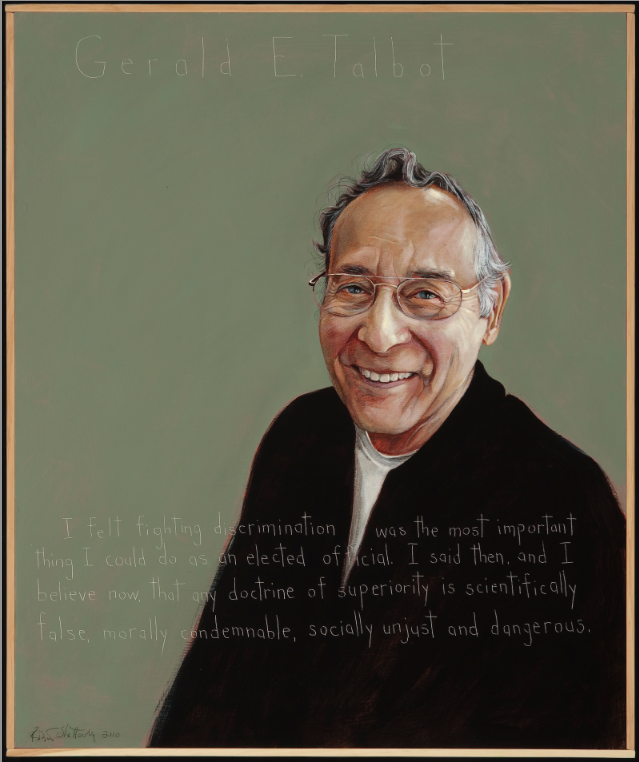
Image from Americans Who Tell The Truth

In 1972, Gerald E. Talbot, activist, historian, archivist, and author, became the first African American elected to the Maine House of Representatives. In 1977, he became Maine’s first lawmaker to sponsor legislation upholding the civil rights of all Mainers. He also ushered through to passage a bill to remove the word “nigger” from 12 Maine place-names, including Nigger Hill Winthrop, known today as the Metcalf Road.

In December 2008, thirty years after Talbot’s storied legislative career ended, he squeezed my elbow in the Chamber of the House of Representatives following the Electoral College ceremony to elect the nation’s first African American President.

“Someday,” Talbot said matter-of-factly, “you’re going to be sitting in one of those chairs.”

I shook my head. I wasn’t so sure. Well—here we are. His words have come to pass. And I’m still stunned.

On Tuesday, November 27, when dropping off forms at the State House, I received my first piece of mail. It was a hand-written card from Representative Talbot.

Emotion crashed over me like surf.

Without your overwhelming support, I’d never have received this extraordinary opportunity. This tremendous honor. I can’t thank you enough.


Surely, my father, the late Hazelle Hickman, is dancing a jig in heaven. My mother is bragging all around her nursing home in Milwaukee. My biological father is celebrating in Florida and my birth mother is cheering in Georgia.


To my biological great grandmother, my birth mother's paternal grandmother, Madree Penn White, Howard University graduate and co-founder of Delta Sigma Theta Sorority, poet, publisher, and small business owner—this one’s for you.

Members of the One Hundred and Twenty-Sixth Legislature of the State of Maine will be sworn in on Wednesday, the fifth of December at ten o’clock in the morning. The proceedings are free and open to the public. I invite you to join me in this historic occasion.

I am most humbled.

Thank you from the bottom of my heart.

Take care of your blessings.

Madree Penn White


The following reprint from the 1943 30th Anniversary Issue of the Delta Journal was written by my biological great grandmother, Madree Penn White, the driving force and inspiration behind the founding of Delta Sigma Theta Sorority. She wrote its first constitution and by-laws.

::

Delta Faces the Future

Before me there sweeps an array of days;
Dark days filled with bitterness; bright days
Too short for gladness; gray days glommed with
Melancholy. Another year of life
Draws to its close. What’s been written—is written.
Neither regret nor tears can wipe away
The pride of shame or foolishness of it;
Yet, the future lures, hope ever beckons on:
From out of the ashes of dead, dead days does
Faith arise, to give her strength to failing fingers
That they may write, on the new page life offers:
Purer concepts, kinder thoughts, better deeds.

Spring 1943 finds a world of tumult and strife, of bloodshed and horror. Men and nations are at each other’s throats. Mixed motives, mixed ideas, mixed purposes; everywhere the emphasis, seemingly is on destruction.

In the midst of these chaotic conditions one finds himself in dire need of something stable to cling to, something permanent, lasting and real upon which to build a new epoch in history.

It is a personal source of inspiration for me to turn to another spring in 1913, when a group of women at Howard University rejoiced over the decision of the Board of Trustees which had granted them the right to form an incorporated body of college women. Women who would extend their chain over the nation; women of high ideals for personal living and community service; women who raised a torch and dedicated themselves to following the gleam, thus were the Founders of Delta Sigma Theta.

Thirty years ago! Thirty years of growth. Thirty years in which thousands of Delta women have been influenced by these ideals, an in turn have influenced the lives of countless thousands they have touched, constructively.

To Delta in these trying times comes the challenge of making others see that ideals inspired by loftiness and interpreted by daily living give something tangible, worthwhile and stable to which one may cling, by which one may steer a course.

In thirty years of existence there has never been a larger opportunity for Delta to fulfill her destiny than now. To Delta—and to each and every Delta woman, everywhere—all my love and best wishes. Delta has come far, yet there are greater heights ahead for her to climb.

—Madree Penn White

::

From her obituary in 1967:

She won the distinction of being the first woman elected associate editor of the Howard University Alumni Journal. In conjunction with twenty-one other young coeds, she founded the Delta Sigma Theta Sorority, January nineteen thirteen. At the same time, she gave first evidence of her militancy in the field of women’s suffrage and human rights. She enjoyed the honor of being the only Negro woman who, with Carrie Nation, in nineteen thirteen, was granted an audience with President Harding and later, Woodrow Wilson and John F. Kennedy. A national figure in journalism, she was recognized as an author of papers, short stories, poems, an editor and publisher.

She engaged in business and financial endeavors as vice president of an insurance company, oil company president, investment administrator, public relations and advertising.

::

I am descended from this remarkable woman. Yes.

Wednesday, November 07, 2012

Elected


The voters of Readfield and Winthrop just elected me to the Maine House of Representatives with 2,915 votes or 59% of the votes cast. Scott Davis, who ran a positive campaign, finished with 2,057 votes.

I'm beside myself.

Surely, my father is dancing a jig in heaven. My mother wants pictures so she can brag about it at her nursing home in Milwaukee. My biological father is dancing a jig in Florida. My birth mother is cheering in Georgia.

I can't yet describe what it means to me. Now, my eyes won't stop raining.

Thank you from the bottom of my heart.

Thursday, June 14, 2012

Thank You

I'm still speechless and can't say much more than thank you from the bottom of my heart for your overwhelming support in the primary election Tuesday.

We received 757 votes, 78% of the votes cast in the Democratic primary.

You have no idea.

Congratulations to Mr. Cookson and his team for running a fine campaign.

On to November....

Monday, June 11, 2012

Vote Hickman

June 12th


As owner of Annabessacook Farm Organic Farm Stand and Bed & Breakfast, I believe small businesses and family farms are burdened with expensive regulations designed to help corporations drive them out of business. I've managed start-ups, directed human resources, operations, and marketing departments. I've been a sole proprietor and a partner. I know small businesses and small farms like the back of my hand. I will fight to change burdensome regulations so small businesses and farms can once again compete on an even playing field and create the jobs we need right here in Maine.

As an advocate for sustainability, I believe Maine should harness the power of the wind and the sun to produce renewable energy and end our addiction to fossil fuels. We'll protect Maine's enthralling beauty, attract more tourism, boost our economy, and create new jobs.

As an organic farmer, I believe locally grown food is national security. I'll work to reform the Maine food code and develop related food policy to make more healthy options available for ourselves and our children every school day. Access to wholesome food is a right for every citizen. We cannot allow a single one of us to go hungry for a single day. Maine has all the natural resources and the hard-working, independent-spirited people to grow, catch, trap, process and distribute enough food to feed our people and strengthen our local economy. Let's stop importing more food than any other state in the contiguous 48. Local food means local jobs.

As an artist and author, I'll leave you with my favorite quote from James Baldwin, my favorite writer and thinker who told us that the role of the artist is to tell us who we are. Given what we face as a state after the last legislative session, I believe it's timely. And necessary:

"One must say Yes to life and embrace it wherever it is found--and it is found in terrible places... For nothing is fixed, forever and forever, it is not fixed; the earth is always shifting, the light is always changing, the sea does not cease to grind down rock. Generations do not cease to be born, and we are responsible to them because we are the only witnesses they have. The sea rises, the light fails, lovers cling to each other, and children cling to us. The moment we cease to hold each other, the moment we break faith with one another, the sea engulfs us, and the light goes out."

If you believe Maine needs a man in the legislature with a strong voice and a vision for our future, then please go to the polls on Tuesday, June 12 and cast your vote for Craig Hickman.

Thank you. Take care of your blessings.