Showing posts with label love. Show all posts

Wednesday, March 14, 2012

Five Years Ago Today


Hazelle Hickman
February 14, 1920 - March 14, 2007

How time flies. Thinking of my mother and sister today. Praying for my mother's continued recovery.

Sunday, January 15, 2012

Back In Business: Hot Meal Kitchen To Reopen At St. Francis

ON BEHALF of the Board of Directors of the Winthrop Hot Meal Kitchen, it brings me great pleasure to announce that we will recommence daily, sit-down service at St. Francis Xavier Parish Hall on Wednesday, January 18. Once again, a nutritious hot will be served each weekday at 11:30 am. Meals are free and all are welcome, no questions asked. We will continue to provide a prepared meal to-go at Annabessacook Farm, 192 Annabessacook Road in Winthrop, each Wednesday from 1:00pm – 6:00pm for those families who need a meal later in the afternoon or early evening.

None of this would be possible without the unwavering support of the parishioners of St. Francis Xavier. Late last year, the church took up a collection and raised $3,190 in addition to a $600 contribution from the Men’s Club. In addition, the late Margery Bellemare requested that contributions in her memory go to the Kitchen. Since her passing last December, we’ve received an additional $1,000 from her loved ones and friends. Such generosity will more than cover the rent and insurance and allows the Kitchen to use other contributions solely for food and future operating costs.

And what contributions we’ve received. Since the last update in October, we’ve received money from another 50 donors, bringing the total to 100. And so we give thanks to the Wayne Community Church, the Winthrop United Methodist Church, and the Winthrop Center Friends Church who took up collections for the cause; the Rotary Club of the Winthrop Area; the National Association for Retired Federal Employees Chapter 248 in Jefferson, Maine; Talk About Tennis in California; Florence K8 Teacher’s Fund in Florence, Arizona; and all the individuals and families in Maine and from around the nation who have been moved to help our community soup kitchen.

A special thank you goes to the Winthrop Food Pantry over on High Street, which has shared food resources with us whenever they have perishable produce that needs to be processed right away; Maranacook Community School for donating proceeds from their Make A Difference Week food drive, as well as the students who baked Christmas cookies for one of our meals; Kerry Wilkins-Deming and Laurie Lee who organized a holiday food drive for the Kitchen at a neighbor’s home in East Winthrop; and Ginger Roberts who organized a Winter Solstice food drive for the Kitchen at Birchwood Yoga Studio in Gardiner.

Last, but certainly not least, we’d like to thank the volunteers who have helped prepare the Wednesday meals at the farm: Steve, Kathy, Yvette, Kim, Joe, Faith, Riley, Kerry, Gail, Jane, Michael, Marcia, Ed, Stephen, Heath, and Donna. We’d also like to thank all the people who made themselves available to volunteer and all the people who cleaned out their cupboards and freezers and dropped off food for us to prepare for the people.

We have seen the need for food among members of our community grow. More younger families with small children have come to the farm for a meal on Wednesdays. Maine ranks first in New England for food insecurity and thirteenth in the nation, a nation where 1 in 4 children go to bed hungry every night. We would eventually like to expand our services beyond lunch to include some weekend meals and evening suppers and will look to collaborate with other agencies, organizations, and institutions in the Winthrop Lakes Region to meet the growing need.

We simply cannot allow anyone in our community to go hungry for a single day.

If you would like to contribute to the cause, please send a donation to Winthrop Hot Meal Kitchen, P.O. Box 472, Winthrop, ME 04364. Contact us at 377-FARM or check out our Facebook page for menus, updates, and more information. Thank you and take care of your blessings.

Saturday, December 31, 2011

A Year Ago Today....

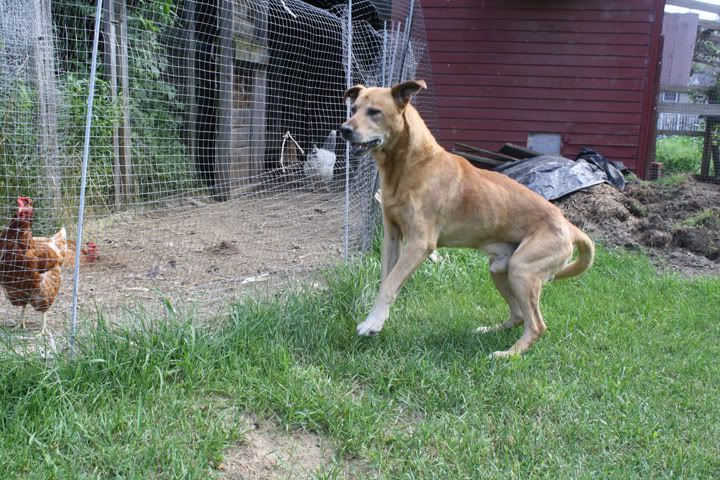
We said goodbye to out beloved dog, J.B. Today, we lit a torch on his grave. Someday this spring, I hope to finally be able to plant a garden where his body rests.


Friday, November 11, 2011

Saluting Our Veterans

Today, we honor all the men and women, living or dead, who have worn the uniform in service to this nation. A special salute to all the members of American Legion Alfred W. Maxwell Jr. Post 40 here in Winthrop; the many veterans I serve with on the Winthrop Rotary; my brother-in-law who has served in the Army with tours in Bosnia, Iraq and Afghanistan; my godbrother who served in the Army and the Navy; my godson who currently serves in the Army National Guard; and last but certainly not least, my late father, a trailblazer and World War II veteran who served with the Tuskegee Airmen in the Army Air Force. He taught me how to rise up after being knocked down, how to dream great dreams, how to live and how to love.

Friday, October 21, 2011

Food Is Life: Remarks to Students at Maranacook Community School, October 20, 2011

I want to thank Pat Stanton, dean of students, for inviting me to speak for your Make A Difference general assembly today. I’m so tired, my legs can hardly hold me up, but here I am. It’s hard to turn down an opportunity to speak to young people who inspire with their commitment and desire to feed people. I'm honored to be here.

A wise man once said, “There’s a hunger beyond food that’s expressed in food, and that’s why feeding is always a kind of miracle.”

There’s a hunger beyond food that’s expressed in food, and that’s why feeding is always a kind of miracle.

::

Back when I was a kid in Milwaukee, Wisconsin, our family struggled to make ends meet. My father worked the first shift at Pabst Blue Ribbon Company in the mail room. A World War II veteran with little education, he was basically the company mailman. My mother held a string of part-time jobs to help put food on the table for their two children. As hard as they both worked, and they worked hard, we needed food stamps in order to survive. Still, my parents made clear in both word and deed that no matter how little we had, someone else had less and we needed to help them however we could.

I’ll never forget the day. I was about three or four years old when a young girl who smelled of dried urine knocked on our door. My father was at work, my sister at school. My mother let the girl in and escorted her to the bathroom where she drew a bath for the girl, who couldn’t have been more than 12 years old. After bathing her, my mother gave her a blouse and a pair of pants and sat her down at the kitchen table for a steaming bowl of Cream of Wheat, bacon and toast. I couldn’t believe how fast the girl devoured it all. It was an image that stuck with me, like good preaching. She ate another bowl of cereal and then my mother let her take a nap on the couch. Later, when it was time for her to leave, my mother handed the girl a brown paper bag with a change of clothes and a peanut butter and jelly sandwich inside.

I couldn’t count how many girls came knocking on our door over the next months, but they came nonetheless. My mother cared for each of them in almost the exact same way, like ritual. Our home was a stop on an underground railroad for throwaway girls.

It’s no surprise, then, that I would turn my current home into place where anyone, no matter their need, can come at any time, no questions asked, and receive food.

If it takes a village to raise a child, it takes an entire community to feed an entire community.

::

Food is life.

When I first made the community aware a year ago that free food was available at the farm 24-7, I heard all sorts of caveats and concerns. “What if someone takes all the fresh food from your farm stand and goes out and sells it?” Where is the love in that question? “Then I guess they need the money to make their rent or pay their mortgage,” I replied. “How can you be so sure that the people who take it really need it if you don’t ask any questions?” You can’t.

But so what.

Last Wednesday, during preparations for the Hot Meal To-Go at Annabessacook Farm that the Winthrop Hot Meal Kitchen provides each Wednesday until we can find a permanent home to provide food and fellowship for people each weekday, a woman called to ask if we still had half a bushel of tomatoes to sell. Her voice sounded vaguely familiar, but I didn’t recognize whose it was. I told her we did and asked her what she wanted them for. “Canning,” she said. “Then we have some left to sell,” I replied. It’s late in the year and tomatoes have pretty much gone by, but we were lucky enough in recent weeks to harvest another three bushels perfect for canning because most of our plants grew in a greenhouse film-covered tunnel in the middle of the field behind the barn.

“How much are you asking for them?” she asked timidly. From her tone, I sensed she had need.

“How much are you offering?”

“10 bucks,” she replied, a question mark still in her voice.

“Perfect. Do you know where we are?”

“Oh, yes. I’ll be over this afternoon.”

Hours later, a woman walked up to the door, a woman I hadn’t seen since last summer. From September through November, she came once or twice a week and purchased pounds of Swiss chard, bushels of tomatoes, cartons of squash. She was preparing for winter and I was honored she chose our farm to buy the food she would process for her family.

“I haven’t seen you in a long time.”

“I’m unemployed now.” The look on her face broke my heart.

“Was it you who called earlier about tomatoes?”

She nodded. I nearly lost it. I wouldn’t call her my friend – we don’t hang out and do stuff together or anything – but she’s certainly my neighbor. I knew she worked for the State of Maine and with all the recent budget cuts, it didn’t surprise me that she’d lost her job. I also knew she had a big extended family to feed and here she was on my doorstep knowing we give away food but offering to buy a half bushel of tomatoes nonetheless.

I tried not to be awkward. I’m not sure I succeeded.

“Um. Well. It’s Wednesday and we offer a free hot meal today in addition to the fresh veggies. Would you like one?”

She shook her head, eyes cast down at the ground upon which we stood.

“We’ll, I’ll be insulted if you don’t take some of this food I cooked, so here.” She obliged. I gave her four meals, asked her to put them in her car and meet me in the garage so I could show her where the tomatoes were.

She handed me the 10 bucks before walking to her car. I didn’t refuse the money because I’ve been poor and hungry and it still never felt right to me to take anything for free since I was lucky enough to always have a few dollars to give. Clearly, she felt the same way. I didn’t want to insult her either.

After we showed her which box to fill up with organic tomatoes, my godson and I left her alone in the garage where all of our fall harvest is stored. Winter squash and pumpkins. Melons, carrots, turnips, rutabagas, and beets. Potatoes, sweet potatoes, cabbage, onions and leeks.

We sat in the kitchen and watched her through the window put the box of tomatoes in her car. Then she went back and got two more boxes of something else. That made my heart sing.

And so it was that a woman in need called on a hot-meal Wednesday offering to buy tomatoes so she wouldn’t feel shame about coming to receive the food she needed. That’s called pride. And I know there are lots of people like her who would never use a traditional food pantry they’d have to sign-in for because their pride simply wouldn’t allow it.

When she was leaving, she saw my godson and expressed her gratitude with a smile. “Tell Craig thanks so much for everything.”

If you saw her walking down the street, you probably wouldn’t think she was hungry. That she needed food. You can’t always tell. You just can’t. You can’t ever be sure the level of need a person has, but know this: everyone has a right to food so we must make sure we don’t keep anyone from the table. No one among us should go hungry for a single day. Put another way: we cannot allow a single person among us to go hungry for a single day.

::

Now make no mistake, feeding people isn’t a selfless act. We’re only as strong as the least among us, so if one person is hungry, we’re all hungry. Moreover, the miracle of feeding people that the wise man I mentioned earlier spoke of happens as much inside the person giving the food as it does in the person receiving it. That’s how love works. The act of giving brings me joy. Pure joy.

Sometimes I happen to be in the music room in the front of the house when I see someone through the window gathering food off the farm stand by the side of the road. Much of the food there disappears in the middle of the night so if I catch a chance during the day, I always stay and watch until they’re finished. What will they take? What do they like to eat? What do I need to grow more of next year? I’ll watch them fill up a bag and drive away. Sometimes a person will sample something – a string bean or a cherry tomato – and decide it’s not sweet enough or firm enough and they’ll choose something else. Sometimes I feel like I’m spying on them, but hey, they can’t see me inside, it’s all out in the open anyway, so I get over myself and allow my writer’s curiosity to win out. When I watch a hungry person or a person in need have a chance to actually choose what they take to eat, I smile then. Or laugh out loud, rain falling from my eyes.

::

Food is life. People who want to live need to eat. And there’s no reason whatsoever why we can’t come together as a community and feed them. I’m going to say that again:

People who want to live need to eat. And there’s no reason whatsoever why we can’t come together as a community and feed them.

So go, young people. Go. Out into the community and collect as many pounds of food as you can collect for the agencies in your community that feed the people.

Food is life.

Now go. Make miracles.

Sunday, October 02, 2011

Giving Thanks

The Board of Directors and the Volunteers of the Winthrop Hot Meal Kitchen would like to say thank you.

Thank you to the little boy who came to the farm one Sunday afternoon with his mother. He had raided his piggy bank of pennies, nickels, dimes and quarters, rolled them all up, carried them up the walkway and put them in my hands. Surely, a child shall lead them.

Thank you to the 50 people, mostly from our community, but from as far away as Wisconsin and New Mexico, who contributed $3,600 or pledged more if needed since September 3. We also give thanks to all the people who anonymously left cash at the door or have offered their help to cook and serve a meal.

Thank you to St. George’s Episcopal Church in New Orleans, Louisiana, for your generous contribution to a soup kitchen way up here in Winthrop, Maine.

Thank you to Phoenix Farm for donating bushels of tomatoes, boxes of cucumbers, and hundreds of pounds of potatoes so our hot meal every Wednesday can feature organic, local food. Thanks also to the singing woman who brought bags of fresh fallen peaches every week till her trees said no more, the man who did the same with his apples, the young man who brought a big bag of cucumbers from his garden, and the man who donated seeds to grow part of next spring’s meals.

Thank you to the young woman who walked up one Wednesday bearing whole grain biscuits. They were good as heaven. Her heart was open. So open. "I'm just here for the people,” she said. “Call on me whenever. I'll peel garlic. Anything at all. I don't care. I'm just here for the people." She brought banana muffins the next week.

Thank you to a neighbor who made minestrone, a woman who made potato salad, the young woman who made seafood chowder and apple pie, and the couple who baked brownies, chocolate chip cookies, and pineapple bread. All of it was marvelous.

Thank you to the man who drove all the way down from Waterville one Wednesday to drop off savory baked ziti with sausage to round out a nutritious meal just as the potato salad ran out.

Thank you to the couple who delivered a trailer load of sturdy shelving so we have a place to store dry goods, the woman who cleared out her freezer of Kentucky ham and her cabinet of canned goods, dried beans and pasta, and all the people who dropped off bags and containers and cartons.

Thank you to the members of American Legion Post 40, Camp Mechuwana, and the Winthrop United Methodist Church for trying to find a way to make a home for the soup kitchen at your facilities. We also thank the people who suggested other locations, such as the Winthrop Grange or the Masonic Lodge.

Thank you to all the concerned citizens in Kennebec County who attended our last board meeting to offer invaluable advice on how to move forward.

Last, but certainly not least, thank you to the parishioners of St. Francis Xavier who have wholeheartedly supported the soup kitchen for more than 25 years with your contributions and your time. To this day, you rally to keep the soup kitchen right where it’s been to continue the mission of feeding the hungry. As a wise bishop once said, “There’s a hunger beyond food that’s expressed in food, and that’s why feeding is always a kind of miracle.” And so we give thanks to the people of the church who’ve made so many small miracles for so many of our most vulnerable citizens over so many years

Amidst this outpouring of support from our awesome community, we’re still searching for a home. Until then, we’ll continue serving a hot meal to-go every Wednesday at Annabessacook Farm, 192 Annabessacook Road in Winthrop. Meals are available, no questions asked, on a first-come, first-serve basis from noon until 6pm. If you know someone in need but maybe too proud to take one or who simply can’t get around, then pick up a meal and take it to them. Please. If you have any questions, call 377-FARM. And if you’d like to contribute to the cause, please send a donation to Winthrop Hot Meal Kitchen, P.O. Box 472, Winthrop, ME 04364.

Wherever we go from here, you can follow our progress on our Facebook page where you can access meeting schedules, minutes and menus. Together, we can do this. Together, we will.

Thank you again. Take care of your blessings.

(This essay first appeared in the Community Advertiser on October 1, 2011. Cross-posted to Winthrop Hot Meal Kitchen.)

Sunday, September 04, 2011

For I Was Hungry And You Gave Me Food

ON AUGUST 22, 2011, the day of my 13th wedding anniversary, a couple of elders walked up to the farm stand. I recognized the woman from the soup kitchen so I figured the two had come to the farm to use our fresh food bank. Turns out they were doing just fine with food, thank the Lord, but they wanted to know if I had any hope that the Winthrop Hot Meal Kitchen over at St. Francis Parish Hall would re-open in time for the school year, as it has every year since 1984.

“There’s always hope,” I assured them.

The business manager of the diocese that oversees the parish is asking $400 per month in order for us to remain there. $400 is way too steep and the board of directors has not agreed to pay it. As far as I’m aware, the soup kitchen has never paid rent before and we simply cannot afford it now. Such an expense would put us in the untenable position that many struggling families face every day – do we choose to buy food or pay the rent?

“If you think there’s hope that it’ll re-open, then I have something for you.”

The gentleman reached into the left chest pocket of his blue shirt and pulled out two folded $50 bills.

“This is from an anonymous donor. You may have it for the soup kitchen if you promise me none of it goes to the church.”

::

Back when I was a kid in Milwaukee, Wisconsin, our family struggled to make ends meet. My father worked the first shift at Pabst Blue Ribbon Company in the mail room. A World War II veteran with little education, he was basically the company mailman. My mother held a string of part-time jobs to help put food on the table for their two children. As hard as they both worked, and they worked hard, we needed food stamps in order to survive. Still, my parents made clear in both word and deed that no matter how little we had, someone else had less and we needed to help them however we could.

I’ll never forget the day. I was about three or four years old when a young girl who smelled of dried urine knocked on our door. My father was at work, my sister at school. My mother let the girl in and escorted her to the bathroom where she drew a bath for the girl, who couldn’t have been more than 12 years old. After bathing her, my mother gave her a blouse and a pair of pants and sat her down at the kitchen table for a steaming bowl of Cream of Wheat, bacon and toast. I couldn’t believe how fast the girl devoured it all. It was an image that stuck with me, like good preaching. She ate another bowl of cereal and then my mother let her take a nap on the couch. Later, when it was time for her to leave, my mother handed the girl a brown paper bag with a change of clothes and a peanut butter and jelly sandwich inside.

I couldn’t count how many girls came knocking on our door over the next months, but they came nonetheless. My mother cared for each of them in almost the exact same way, like ritual. Our home was a stop on an underground railroad for throwaway girls.

::

When you walk into the parish hall at St. Francis, a collage of old photographs hanging on the wall to the left catches your eye. Emblazoned on plaques amidst the images of days gone by are the words “Feed the Hungry” and “Clothe the Naked.” For more than 25 years, volunteers have served thousands in the hall who need the food and the fellowship they receive there to survive. Is there anything more nurturing and sustaining than sitting down around a table and breaking bread with people?

Now, the food and fellowship needed by many families in our community are threatened because church representatives say the church cannot afford or does not want to continue to host a soup kitchen on its premises without expensive “help” from the volunteer organization that fulfills an essential part of the church’s mission. The business manager made it as clear as silver striking crystal.

“Don’t you people have anywhere else you can go?”

She looked me directly in my face at our last board meeting and asked that question. A question that seemed to betray the good faith negotiations I thought we were having about the $400 per month in rent the church is asking for us to remain and serve the community. You see, the money was needed to help pay for the electricity the old freezers and refrigerators in the basement of the church consume. Or so she had told us this past spring. Make no mistake, no appliances, no matter how inefficient, consume $400 in electricity each month. Still, we wanted to work something out. So when we offered to replace the old ones with brand new energy efficient appliances, something we ought to do anyway, and reduce the electrical costs to a mere $30 per month, she refused to budge from the $400.

“It’s not just the electricity, but it’s also the heat and the snow removal, and…”

“We don’t use any heat,” I said.

The stoves emit enough heat to warm the entire parish hall when they’re fired up for the soup kitchen. Since another group pays for the propane that fires the stoves, the soup kitchen doesn’t incur any costs for the fuel that not only cooks the meals but heats the space in the cold of winter.

“If snow removal is now also on the table,” I offered, “then why don’t we operate the kitchen during the months when there’s no snow and close it in the snowiest part of winter?”

“You can pick apart this $400 all you want,” she continued, “but you should know that we just recently had to pay out an $11,000 claim for a woman who fell on the lot. Do you even know about this fall?”

“Well, yes,” replied the chair of our board, who also happens to be a member of the parish. “I was walking with her. I was the one who helped her up and called for help.”

Silence fell over the room like prayer. Many of the board members dropped their heads and averted their eyes as though they were ashamed of the exchange they just witnessed. How could it be that this business manager would assume an active member of the church wouldn’t know what happened on the property? Especially when this same member can cite chapter and verse the amount of money the church collects in offerings every Sunday. This money, this bread, if you will, cannot go to defray the cost of the soup kitchen because it travels like a prodigal son to Augusta every week. To be spent on whatever the higher-ups there decide. This according to the testimony of every representative of the parish who has attended our summer board meetings.

In short, the Winthrop Hot Meal Kitchen was not able to re-open in time for the start of school because the business manager responsible for the church’s bottom line sees every person who uses the kitchen as a big old dollar-sign liability. Consequently, if we are to remain where we are and serve the people who want the soup kitchen to remain right where it is, we have to cough up $400 per month to help defray the cost of the church’s liability claims. Not the electric bill, or the heating bill, or the snow removal bill, but the liability claims. How am I so sure? Because the business manager of the diocese looked me in my face and mentioned its liability claims four times in seven minutes. She even referenced a copy of the recent claim she didn’t think any of us knew about which sat on the table right in front of her. Oh, yeah. She also wants us to purchase our own liability insurance policy.

How did we get to this place? It’s no longer in the church’s budget to feed the hungry and clothe the naked? Isn’t “love thy neighbor as thyself” a principal tenet of Christianity?

My mother, who still lives in the same house in Milwaukee where I grew up, is 83-years-old, widowed, and battling cancer. Mostly through her church, she still helps those less fortunate than she, feeding the hungry, counseling teenage unwed mothers, providing hand-sewn quilts to those who will be cold this winter. She simply cannot fathom this story I told her about our soup kitchen the other day. Could. Not. Fathom it. I can’t actually write what she said but she had to put her religion down in order to say it.

It seems that everywhere I turn these days some super-sized corporate entity, for-profit or not, stands between us and our ability to care for our most vulnerable citizens.

I would imagine this is why the man representing that anonymous donor walked up to my door on August 22 and asked me to promise him that no part of those two folded $50 bills he put in my right hand would go to the church.

::

“Isn’t there somewhere else you people can go?”

You better believe it. We the people will make a way out of no way, if we must, and find a place to serve a nutritious hot meal to those who come up my driveway or stop me at the grocery store to ask me when and where the soup kitchen will re-open.

I said it before and I mean it again: People who want to live need to eat. And there’s no reason whatsoever why we can’t come together as a community and feed them.

So, if you’re with me, then join me. Please. Give us this day our daily bread. Send a check made out to the Winthrop Hot Meal Kitchen, no amount too big or small, and mail it to P.O. Box 472, Winthrop, ME 04364. You may also click on the "Donate" button below. If you have a facility in Winthrop or the contiguous townships with a commercial kitchen and hall that can seat and serve 50 people every weekday, as well as a space on the premises for two large freezers, a refrigerator and ample dry-good storage, please step forward. If push comes to shove, we’ll open the earth and build a facility from the ground up. We must ensure that those who depend on our soup kitchen for sustenance and fellowship will not be displaced or inconvenienced.

It’s the least we can do for the least among us.

In the meantime, I’ll prepare a simple hot meal every Wednesday and put it in to-go containers for pick up at Annabessacook Farm at 192 Annabessacook Road in Winthrop. It may only be beans and rice or macaroni and cheese, but it will be something. The meal will be available on a first-come, first-serve basis starting at noon every Wednesday, come rain, snow, sleet, or shine. If there are leftovers, I’ll freeze them and make them available throughout the week at our food bank. Call 377-FARM if you have any questions or would like to help. Take care of your blessings.


(This essay first appeared in the Community Advertiser on September 3, 2011)

Monday, August 22, 2011

13 Years Ago Today


Friends came...


...bearing gifts.


They gathered in our backyard to see us marry.


Before our altar...


...we exchanged vows.


Daddy sang "Ebb Tide," my favorite love song.


We joined our lights...


...and became one heart.


Everybody...


...cried.


Two families became one.


How sweet it is.

Saturday, April 16, 2011

Spring Babies At Annabessacook Farm


A slideshow of baby goats Stew and Boter, and our surprise lamb Mushroom, born in the rain and mud. Best viewed in full screen mode.

Monday, February 14, 2011

Honoring My Father

TODAY my father would have been 91-years-old. A Tuskegee Airman, for which he was very proud, my father was a strong man who taught me how to care for others, especially when they are needy or sick. I will honor him today by excerpting the Book of Hazelle from Fumbling Toward Divinity.

1
AND IT CAME TO PASS in those days that Hitler committed suicide in his Berlin bunker. One week later, during the second week of May in the nineteen hundred and forty-fifth year, Nazi Germany surrendered unconditionally and the war in Europe ended.

In the first weeks of August, the United States dropped the atomic bomb on Nagasaki and Hiroshima and the Soviet Union declared war on Japan and invaded Manchuria. On the fourteenth day of the month, Japan announced its surrender—so long as it could keep its emperor—and World War II, a most devastating war in terms of material destruction, global scale, and lives lost, ended.

Hazelle returned from the Philippines, where he had been stationed since the nineteen hundred and forty-second year, and found that the country he’d left behind wasn’t too kind to Negro servicemen returning from war.

Hazelle came back through California with a few of the others he’d attended Tuskegee with in the nineteen hundred and thirty-ninth year. After hanging out in the Arizona desert, he returned to Tennessee, to the city of Beale Street and barbeque, basement slow dances and jazz, three years before Elvis moved in from Tupelo, Mississippi.

Still, Hazelle couldn’t find work. And so it was on the fifteenth day of January in the nineteen hundred and forty-sixth year that he went up from Memphis, Tennessee, to Milwaukee, Wisconsin, on a Greyhound bus. “Mighty nice day for a bus ride,” said Hazelle looking up at the driver from the curb. “What’s your name, sir?”

“Frankie,” the driver responded.

“My name is Hazelle, but you can call me Mister Charlie.” His tone was respectful with a hint of sarcasm. Hazelle tipped his hat to Frankie, flashed his gold tooth and moved to the back of the bus. And so he went up on a Greyhound Bus to the beer capital of America where his one-and-only brother Willie Lee said it was easier for a Negro man to find work.

2
Hazelle the second son was born by a midwife to Lee and Emma Ball Hickman in Inverness, Mississippi, sometime in the second month of the year.

Apparently, on the day he was born, no one glanced at the calendar. If someone had, they failed to record what day it was.

It wouldn’t become clear until the nineteen eighties exactly when Hazelle was born (and even then, his wife would ferociously debate the date or attempt to conceal the obvious), but throughout most of his life, Hazelle observed his birth on the twentieth day of February, in the nineteen hundred and twenty-fourth year.

Whenever he was born, one thing was clear without refute—Hazelle was jazz’s fraternal twin. Hazelle may not have been born in New Orleans, but he and jazz grew up together in the nineteen twenties, matured in the thirties, and took to the world in the forties. Hazelle claimed to have met Bessie Smith, heard Louis Armstrong play live, and auditioned for one of Billie Holiday’s back-up singers in Harlem—all before entering the service at the age of sixteen.

Believing himself sixteen-years-old in nineteen hundred and forty, he had to lie to gain entrance into the service, which only admitted young men of eighteen. Hazelle was blessed with a full head of gray hair at the ripe age of twelve (or sixteen, as the case may be). The service had no difficulty believing him to be nineteen.

3
And so it was that Hazelle entered the Army Air Force and concerned himself with the taking off and landing of airplanes. During the Second World War, he became a plotter. When he got to Milwaukee, Hazelle pursued his desire to work at a civilian airport.

Dressed up sharp, Army Air Force papers in hand, Hazelle took the long trolley ride from Sixth and Vine streets, where he lived with his brother, through the south side to General Mitchell Field, Milwaukee’s municipal airport.

He had called ahead for the interview, and over the phone, the hiring manager thought that Hazelle’s military plotting experience made him a very good candidate for the job of air traffic controller.

“Hazelle Hickman to see Mister Black about the plotter job.”

The eyes of the bifocaled receptionist with the fire-engine pompadour and pale, freckled skin scanned his tweed pants, his matching jacket, his rust and brown tie with the gold slanted stripes, his silver hair, and his colored skin and replied, “You can have a seat there and he’ll be right with you.”

Hazelle did what he was told, as he had for at least the last six years. Outside the window, he could see the two-engine prop planes rising and landing. Even though an emergency crash landing he’d endured during the war rendered him unwilling and unable to ever get inside those winged steel vessels again, airplanes would always deserve his wonder with their miraculous ability to defy the maw of gravity and take flight.

More than a dozen planes had come and gone while Hazelle waited patiently for Mister Black to be right with him. Finally, the pale-skinned woman emerged from behind a windowed door on the other side of the waiting area. “I’m so sorry that you’ve waited so long and that no one was able to call you before you came all this way. I’m so sorry, really I am. I wish I was able to help you, but the position was filled just today.” Her face flushed red as her mountain of hair. “You know what? Maybe I can help,” she continued, raising the pitch of her voice as though she’d made a remarkable discovery. “Consider this your lucky day. If you check downstairs in personnel, I know for a fact that there are several openings for second- and third-shift janitors.”

“Thank you, ma’am. You tell Mister Black there that I sure hope God blesses him.” He tipped his hat as he walked out the door. “You have yourself a real nice afternoon, ya hear?”

And so Hazelle became an interior decorator, a waiter, a cook, a chef, a house painter, and even pondered a career as a nightclub singer and a recording artist—oh, how that tenor voice could croon!—before he began his thirty-plus year tenure in office services at the Pabst Blue Ribbon Company. But before he met Pabst, he met the woman with whom he’d spend the rest of his life.

4
“I met her almost as soon as I got to Milwaukee. It was forty-six and I couldna been here for more than a month. I went to a USO dance at the Pfister Hotel. They had these events for veterans every so often. They were social gatherings where all the beautiful young ladies might come and give us handsome gentlemen a bit of their time and attention. It was one of the few events back in the day where black and white folk could mingle. They even had a big band. Live. You better believe couples were cuttin a rug, jitterbuggin all over the dance floor.

“I hadn’t yet picked out any beauties to test my toe and get my heart a-jumpin. Then my buddy, Smitty, stopped in the middle of our conversation and raised his eyebrows. He motioned for me to turn and look at the little bit of heaven standin just behind me with a smile on her face bright as a Mississippi morning. I walked right over to her.

“‘Well, hello sunshine,’ I kinda half sung in my best Nat King Cole impersonation. If a colored girl could blush, her face woulda glowed hot as the Arizona desert.

“I reached for her hand. ‘Before you try kissing it,’ she said, pulling her hand gently away from the path to my lips, ‘why don’t you take me on the dance floor and introduce yourself properly.’

“How can a man with a heartbeat resist that? They say it only happens in fairy tales. At the first sight of her, the very first sight, I knew it was love. So I guess you could say our fairy tale started on the dance floor that very night.”

Thursday, February 03, 2011

Quote For The Day

"MEN GO abroad to wonder at the heights of mountains, at the huge waves of the sea, at the long courses of the rivers, at the vast compass of the ocean, at the circular motions of the stars, and yet they pass by themselves without wondering."

--Saint Augustine

Monday, January 17, 2011

Loyalty


A dog, 'Leao', sits for a second consecutive day, next to the grave of her owner, Cristina Maria Cesario Santana, who died in the week's catastrophic landslides in Brazil, at the cemetery in Teresopolis, near Rio de Janiero, on January 15, 2011. By Vanderlei Almeida/AFP/Getty. [source]

Friday, December 31, 2010

J.B., January 12, 1997 - December 31, 2010


No matter how many times you experience significant loss, it never gets any easier to endure. When a part of you dies, grief, seemingly unbearable, crashes over you like waves. Gigantic, powerful waves. Fighting against the drowning wears you out. Wears you out.

At 12:20 PM on New Year's Eve day, J.B., my beloved dog, finally gave up the ghost. I slept on the floor by his side the night before because I just knew it would be his last night with us. I couldn't bring myself to call the vet, so we let him go on his own.

The morning before, he ate a few last morsels of fried chicken but didn't move from his bed the entire day. The evening before that, he had gotten up and dragged himself into the living room when Jop came home just to give and receive some love. The evening before he passed, he had no energy left for even that. But later, in the middle of the night, he kept raising his head and looking around. I believe he was looking for Jop, but I couldn't bring myself to go upstairs and wake him up. J.B. seized up more than once, expelling a loud noise, but he didn’t let go. He went back to sleep, raising his head and looking around every so often.

He waited for his other daddy to come home before he went. Jop had to take care of a friend that morning. As soon as he returned, J.B. tried to get up from his bed to no avail. Finally, I carried him outside where he was able to stand up one last time. He wagged his tail. Tried to walk to the barn to look for him. Finally, Jop came around, sat down on the back porch steps and started to rub J.B.'s face. Scratched him under both ears like he loved so much. Just as I walked back out, J.B. threw back his head, seized up and fell to the icy ground. He tried to come back one last time, gasping for breath in long intervals. But we told him to go. Please, go. Held him till his gasping ceased.

He was gone. We buried him under the weeping willow tree in the grave we had dug back on Labor Day weekend. Back when he first began his long and arduous journey toward death. Long because he didn’t want to leave. Arduous because he didn’t want to let go. Didn’t want to stop chasing the chickens or exploring all the smells in the barn. Didn’t want to stop barking at the sheep or grazing with the horses or greeting the customers, his tail wagging all the while. Didn’t want to stop pushing his snout so hard against my chest it felt as though he wanted to crawl inside.

He didn’t want to stop loving.

J.B., who we adopted at three months and named after my favorite author James Baldwin and both of us (Jop Blom and Joseph Bernard, the name my birth mother gave me when I was first born) is my inspiration. He lived life with passion and never met a challenge he couldn't conquer. Like all dogs, he was unconditional love incarnate. He pulled me through many of life's greatest challenges, his devotion abiding. Two weeks shy of 14-years-old, his life spanned three decades. His indomitable spirit was the strongest I've ever known.

I’ll find you
In the morning sun
And when the night is new.
I’ll be looking at the moon,
But I’ll be seeing you.

Farewell, old friend. So long.


Sunday, December 26, 2010

My Mother's Cake


When I was about seven or eight, I began to teach myself how to bake from recipes in the original Betty Crocker's Cookbook. The paperback culinary bible was so old, so worn out, some of the pages disintegrated between my fingers upon turning. The whole thing had to be held together with a pair of crisscrossed rubber bands.

I made a yellow sheet cake first. I didn't understand the concept of creaming the butter and sugar together. It turned out like sweet cornbread. My mother said it tasted good, though. Guess she wanted to encourage me to keep trying. And so I did.

She used to come home from work every afternoon and ask me what I had learned to bake. Looking forward to tasting whatever it was. It must have been summer for I wasn't in school. And there I was heating up an already hot kitchen with a child's experiments. She never once complained. Eventually, I figured out the art of building a cake from scratch that was moist and light and downright sinful. I perfected an old fashioned burnt sugar caramel cake and then had the nerve to figure out how to make hand-churned caramel pecan ice cream to go with it. The combination became my mother's favorite and most requested dessert.

Yesterday, I made my mother's cake for the first time since August 2001. I wanted to be with her for Christmas to see how she's faring since receiving the news that she's now facing a mortal challenge in her bone marrow. Still too exhausted from the year, I wasn't able to make that happen. So I made her cake instead. Talked to her over the phone just as I was spreading the batter into the pans. Because of her diabetes, she can't have any sweets anymore, but she sounded pleased that I was building her heaven anyway.

We hosted a dinner at the farm for six. Before devouring my mother's cake (alongside a warm apple pie in a pâte brisée to die for), we indulged in a dinner of crab bisque, grilled lamb chops, roasted rabbit in Dijon cream (a repeat from Thanksgiving too good to wait another year for), wild black and mahogany rice, and steamed haricot vert tossed in sesame oil and orange zest.

Hope your Christmas celebrations included friends, family, peace, and lots of love.

Burnt Sugar Caramel Cake


For the burnt sugar syrup:
3/4 cup granulated sugar
3/4 cup hot tap water

Dump the sugar in a skillet over medium-low heat. Shake the pan to spread the sugar and then let it melt, shaking again to keep the syrup browning evenly. Once it becomes the deep bronze color of an old copper penny and begins to smoke, gradually add the hot water. The sugar will get all bubbly and smoke even more. If you stir the syrup, use a metal spoon and stir just enough to mix the water so all the sugar dissolves, which takes about 8 minutes. Remove from heat, set aside, and let cool. They syrup will thicken as it cools.

For the cake:
3 cups unbleached cake flour, sifted
1 teaspoon salt
1 1/2 teaspoons baking soda
2 1/2 teaspoons double acting baking powder
3/4 cup butter, softened
1 1/2 cup sugar
2 eggs, separated
2/3 cup burnt sugar syrup
1 teaspoon pure vanilla extract
1 1/2 cup sour raw milk or buttermilk, room temperature

Preheat oven to 350. Sift together flour, salt, soda, and baking powder. Set aside.

In a separate bowl, cream butter, adding sugar gradually until light and fluffy. Add one egg yolk at the time, beating thoroughly after each addition. Add the vanilla. Stir in cooled burnt sugar syrup.

Alternately mix the flour and the dairy into the batter, beating gently until smooth.

Beat egg whites on high until stiff but not dry. Fold into batter.

Spread batter evenly in two 8-inch greased and floured cake pans. (I add a circle of wax paper to the bottom of each pan to ensure a moist texture.) Bake for 30 - 35 minutes until the centers rise and a toothpick comes out virtually clean. Remove from oven and cool on wire rack for 5 minutes. Invert pans on rack to remove cake. Let cool completely.

For the caramel frosting:
3/4 cup butter
2 cups light brown sugar, firmly packed
Dash of salt
3/4 cup heavy cream
1 teaspoon pure vanilla extract
2 1/2 cups confectioners' sugar, sifted

Mix butter, brown sugar and salt in a saucepan over medium heat. Bring to a boil. Let bubble for 15 minutes, stirring constantly. Mix in cream and cook for another 10 minutes, stirring.

Remove from heat, stir in vanilla. Transfer to a stainless steel bowl. Beating at high speed, gradually add confectioner's sugar until it comes to a spreading consistency. Sparingly add more cream if necessary.

Garnish frosted cake with pecans.

::

Cross-posted to Annabessacook Farm

Friday, November 26, 2010

The Menu

The menu was roasted organic butternut squash soup, herb-marinated roasted Moonshadow Farm (Old Lewiston Rd.) rabbit with mustard sauce, brined Mt. Pisgah pheasant roasted with bacon bard, glazed organic turnips, cranberry relish, risotto, whole-wheat rolls, sweet potato souffle torte, and frozen vanilla custard. Dinner for four at Annabessacook Farm was decadent.

Thursday, November 25, 2010

Happy Thanksgiving


I received this email today. I'm sharing it with you in its entirety. I couldn't have written it any better.

This Thanksgiving, give thanks to the farmers and farmworkers who make this meal possible.

Dear Craig,

It’s that time of year again. Every fall people travel across the country or just across town to share a meal with family, friends and loved ones in order to celebrate another year of health, happiness and good food. Born from the tradition of one tribe bravely and generously helping another tribe in a time of need, this celebration has turned into an annual feast where our nation sits down collectively to share in the gratitude over another bountiful harvest.

Here at Food Democracy Now!, we wanted to take a moment and say that we are all thankful for the opportunity to work with so many amazing people across the country who are dedicated to building a truly sustainable food system that improves the lives of farmers, workers, eaters, communities and the planet.

Every day I wake up looking for a way to convey one of the most important messages of our time: if you want to change the world, change how you eat. In addition, at Food Democracy Now! we strive to give you opportunities to help make that happen through positive action.

Central to the growing understanding of how what we eat impacts the planet is knowing where our food comes from, how it was raised, who grew it and helped that food find its way to our tables. Fortunately, there’s no shortage of incredible people and organizations out there working to educate more Americans and helping bring the change we need to thrive in the 21st century.

One tradition that we have in our household is that at every meal we take a moment to say what we are thankful for. Inevitably, it always comes back to the food: Who cooked it, who helped prepare it and who raised it and brought the food to our tables.

Here at Food Democracy Now!, we’d like to ask you to join us in this tradition by joining us on Facebook and sharing with us what you are Thankful for. If there are any farmers that you’d like to give a shout out to, please mention them too.

http://action.fooddemocracynow.org/go/285?akid=233.147124._4YYoC&t=8

As we sit down to eat this symbolic meal, nothing could be as important as honoring the individuals that labor everyday on farms and in the fields, often doing backbreaking work, with very little financial reward to make it possible for us to nourish our bodies.

I wanted to share an important video with each of you and ask that you pass it on.

http://action.fooddemocracynow.org/go/282?akid=233.147124._4YYoC&t=10

This video highlights an impressive campaign by The Coalition of Immokalee Workers (CIW) who have advocated tirelessly for the rights of farmworkers to be paid a decent wage for the work of picking tomatoes. Every day in Florida, workers go out into the fields under the hot sun to pick the tomatoes that end up on our plates.

For a full bucket of tomatoes, weighing 32 pounds, farmworkers are only paid 45 to 50 cents. Unimaginably, this wage has not changed in more than 30 years. Fortunately, there are groups like the Coalition of Immokalee Workers who are advocating to change this.

Incredibly, these farmworkers are only asking for a raise of as little as a penny a pound.

As we eat our Thanksgiving meals this year, I want to ask that we all begin to think deeper about our food and the consequences that our meals have on everything around us. It’s really unfathomable that as little as a penny per pound could make a difference in someone’s life, but time after time, as we’ve found out, it’s the little changes that eventually add up.

Here at Food Democracy Now!, we’d like to honor all the farmers and farmworkers who make this day possible and to all the people across the country working tirelessly to bring us the stories of those who help make the world a better place by growing and harvesting our food.

With gratitude,

Dave Murphy

Founder and Executive Director

Food Democracy Now!


Happy Thanksgiving. Take care of your blessings.

Tuesday, November 16, 2010

The Eyes Of Pain

I looked into a woman's eyes today and saw pain like none I've ever seen.

She just buried her son.

I'm not sure that there's anything in life more cruel than burying a child.

But for a mother burying her 26-year-old son?

I have no words.

I finally finished planting garlic today. It's nicely composted and mulched with two bales of blond straw.

Here's hoping that mother with pain-filled eyes can fix her heart on something growing anew next spring.

Right now, I can't imagine she can even fall asleep without falling apart.

Friday, November 05, 2010

Thank You

Dear Supporters,

The official results are in. I received 1736 votes or 39.1% of the votes cast, no where near enough to win the election. Nevertheless, we won over a lot of hearts and minds in the process. As I already wrote, I've had the time of my life and have no regrets.

At least three working-class men came out of the polling place yesterday, looked me right in my eye, and told me they were all set to vote for me until they saw on the ballot that I was a Democrat.

We have a lot of work to do.

I want to thank you all from the bottom of my heart for your support, your well-wishes, and your votes. I couldn't have made such an impression on the people of this district without your help.

We ran the best campaign this district has ever seen and we have done a big part to change the conversation. It seems more people are talking about healthy, local food more than ever before. Early morning of the election, I was putting up a sign on the main intersection of in-town Readfield and a woman rolled down her window to tell me that she would be rooting hard for me all day. That she and her husband lived in Mt. Vernon and therefore couldn't vote for me, but they wanted me to win so badly. There, in the dark, after their car traveled down Route 17 headed toward Manchester, I got all choked up. And then I smiled.

I am both proud and humbled to have made such a difference.

While many of you have already expressed encouragement that I run again in 2012, all I can say right now is that I can't see past the 10 pounds of garlic I still need to plant before the ground freezes.

I can promise you this:

I will continue to do what I do with a passion.

Thank you again. Take care of your blessings.


Craig V. Hickman
Winthrop